
#0023 · 🦊 mammals
Greater White-toothed Shrew
🇳🇱 Huisspitsmuis ·Crocidura russula


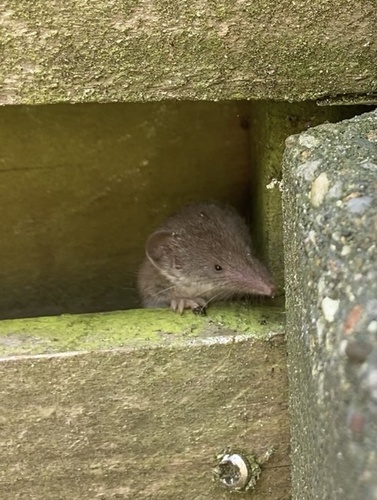 📍 Drenthe, NL
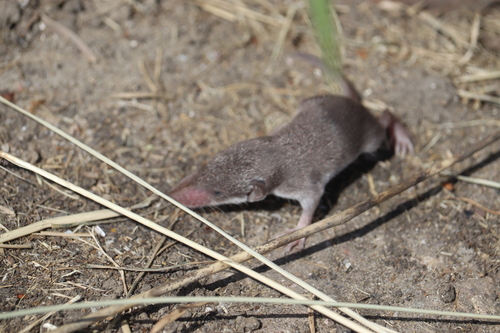 📍 Hellevoetsluis, Nederland
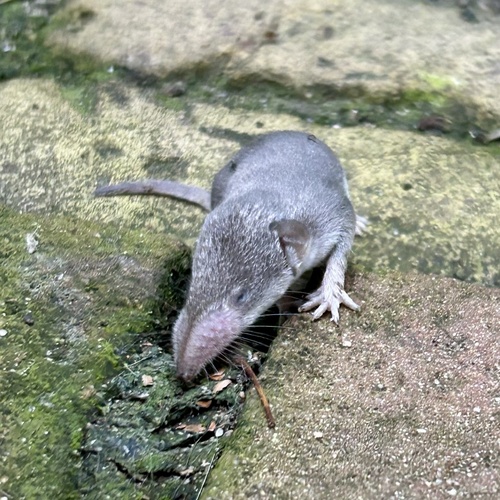 📍 Torenlaan, Blaricum, Noord-Holland, NL
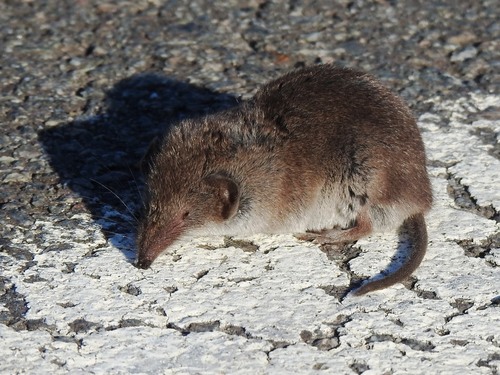 📍 4306 Nieuwerkerk, Netherlands
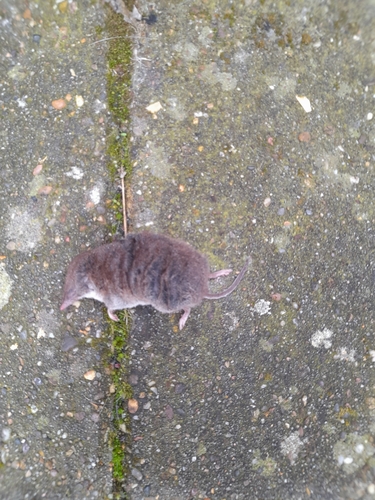 📍 Noord-Holland, NL
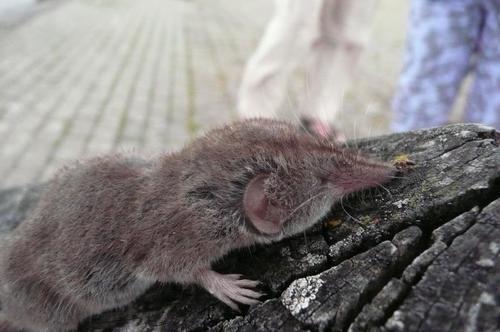 📍 Schiermonnikoog - Jachthaven
10 photos from iNaturalist (Creative Commons) · credits & licences
- 1. © Carles Pastor · CC BY-SA 4.0
- 2. © Jakob Fahr · CC BY-NC 4.0
- 3. © Simon · CC BY-NC 4.0
- 4. © Jakob Fahr · CC BY-NC 4.0
- 5. Drenthe, NL:© nin99 · CC BY-NC 4.0
- 6. Hellevoetsluis, Nederland:© Michel Langeveld · CC BY 4.0
- 7. Torenlaan, Blaricum, Noord-Holland, NL:© ppdevries · CC BY-NC 4.0
- 8. 4306 Nieuwerkerk, Netherlands:© Jan Meerman · CC BY-NC 4.0
- 9. Noord-Holland, NL:© thegreatdodo · CC BY-NC 4.0
- 10. Schiermonnikoog - Jachthaven:© Andre Hosper · CC BY 4.0
what is it?
The greater white-toothed shrew ( Crocidura russula ) is a small insectivorous mammal found in Europe and North Africa. It is the most common of the white-toothed shrews. This species is found along the Mediterranean, Netherlands, Belgium, Germany and Portugal; in addition, the Osorio shrew of the Canary island of Gran Canaria, originally described as a separate species ( Crocidura osorio ), was later discovered to be a population of introduced greater white-toothed shrew. Its preferred habitats are grassland and...
base stats
Bars compare against all animals on log scales: up to 300,000 Dutch and 600,000 worldwide sightings (the most-seen species), 150 t (blue whale), 30 m and 400 years (Greenland shark).
fun facts
- Spotted 62 times in the Netherlands on iNaturalist: the #23 most seen of the mammals in NL.
- 3,578 observations worldwide on iNaturalist.
- Scientifically named by Johann Hermann in 1780 (246 years ago).
fact sheet
- English
- Greater White-toothed Shrew
- Nederlands
- Huisspitsmuis
- scientific name
- Crocidura russula
- class
- Mammalia
- order
- Eulipotyphla
- family
- Soricidae
- IUCN Red List
- LC · least concern
- in NL
- native
- sightings in NL
- 62
- sightings in Europe
- 1,220
- sightings worldwide
- 3,578
- GBIF records in NL
- 16,251
- weight
- —
- length
- —
- lifespan
- —
- named
- 1780 by Johann Hermann
IUCN in Dutch: niet bedreigd. Blank means the sources don't say.
relatives· Soricidae
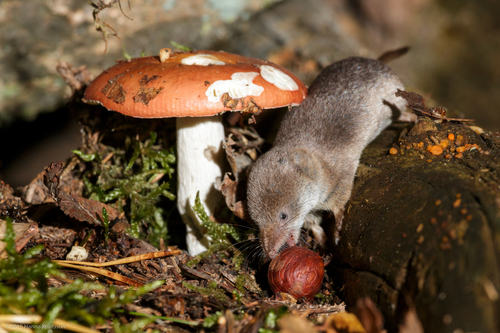 #0030 📷 7
Common Shrew
🇳🇱 Bosspitsmuis
Sorex araneus
LC 👀 29 in NL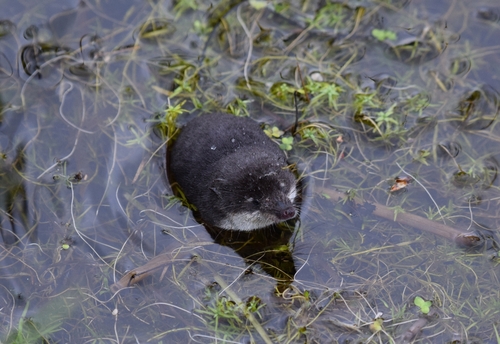 #0040 📷 10
Eurasian Water Shrew
🇳🇱 Waterspitsmuis
Neomys fodiens
LC 👀 16 in NL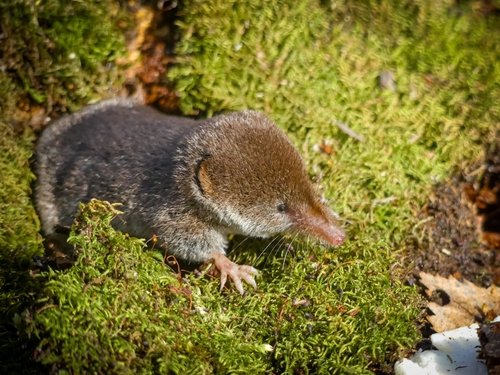 #0053 📷 8
Eurasian Pygmy Shrew
🇳🇱 Dwergspitsmuis
Sorex minutus
LC 👀 5 in NL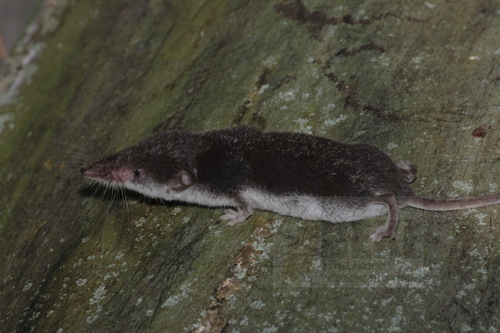 #0065 📷 7
Bicoloured Shrew
🇳🇱 Veldspitsmuis
Crocidura leucodon
LC 👀 2 in NL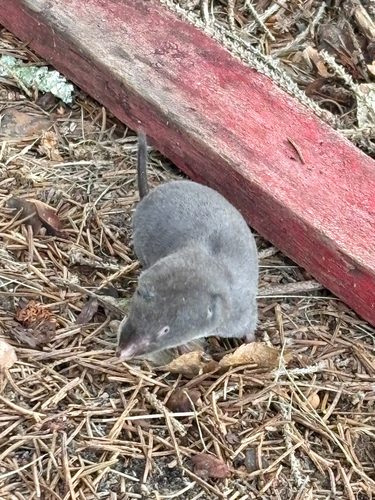 #0237 📷 8
Northern Short-tailed Shrew
🇳🇱 Kortstaartspitsmuis
Blarina brevicauda
LC 🌍 17.9k seen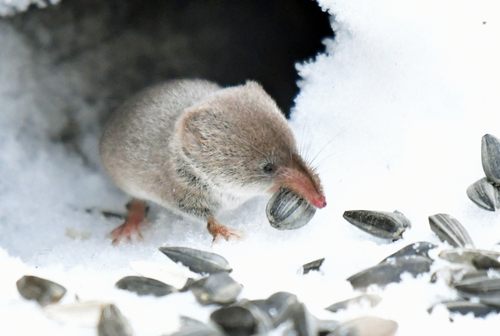 #0399 📷 10
Masked Shrew
🇳🇱 Amerikaanse Gemaskerde Spitsmuis
Sorex cinereus
LC 🌍 3.1k seen #0478 📷 10
Asian House Shrew
🇳🇱 Muskusspitsmuis
Suncus murinus
LC 🌍 2k seen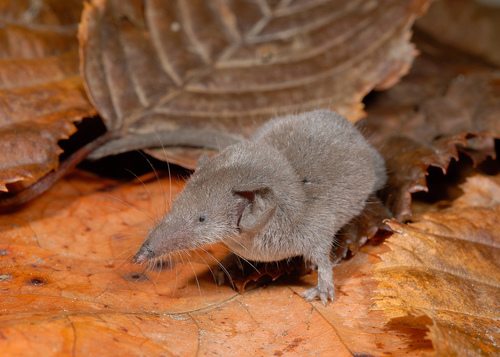 #0157 📷 10
Pygmy White-toothed Shrew
🇳🇱 Wimperspitsmuis
Suncus etruscus
LC 🌍 772 seen
Sources: iNaturalist taxon 46640, Wikidata Q572732, GBIF 2435654, Wikipedia (EN), Wikipedia (NL). Intro text from Wikipedia (CC BY-SA 4.0).Updated 2026-10-24.