
#2356 · 🐟 fish
Bigbelly Seahorse
Hippocampus abdominalis

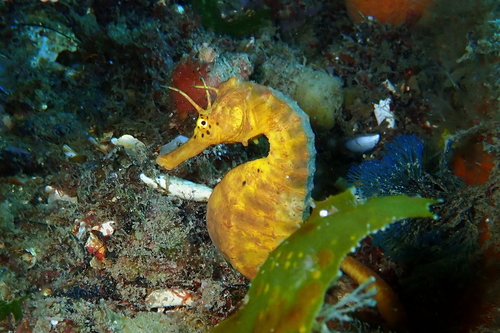


8 photos from iNaturalist (Creative Commons) · credits & licences
what is it?
The big-belly seahorse or pot-bellied seahorse , Hippocampus abdominalis , is one of the largest seahorse species in the world with a length of up to 35 cm, and is the largest in Australia. Seahorses are members of the family Syngnathidae, and are teleost fishes. They are found in southeast Australia and New Zealand, and are listed on Appendix II of CITES.
base stats
Bars compare against all animals on log scales: up to 300,000 Dutch and 600,000 worldwide sightings (the most-seen species), 150 t (blue whale), 30 m and 400 years (Greenland shark).
fun facts
- No confirmed wild sightings in the Netherlands on iNaturalist: you'd have to travel for this one.
- 4,078 observations worldwide on iNaturalist.
- Scientifically named by René Lesson in 1827 (199 years ago).
fact sheet
- English
- Bigbelly Seahorse
- scientific name
- Hippocampus abdominalis
- class
- Actinopterygii
- order
- Syngnathiformes
- family
- Syngnathidae
- IUCN Red List
- LC · least concern
- sightings in NL
- 0
- sightings worldwide
- 4,078
- GBIF records in NL
- 0
- weight
- —
- length
- —
- lifespan
- —
- named
- 1827 by René Lesson
IUCN in Dutch: niet bedreigd. Blank means the sources don't say.
relatives· Syngnathidae
 #2077 📷 10
Short-snouted Seahorse
🇳🇱 Kortsnuitzeepaardje
Hippocampus hippocampus
LC 👀 161 in NL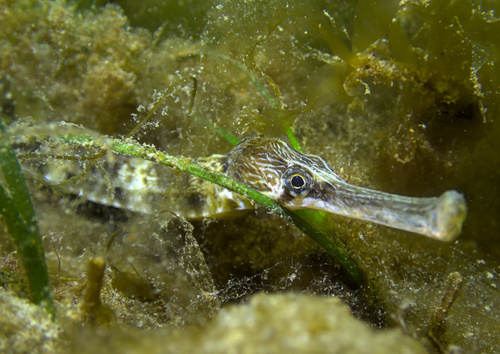 #2087 📷 7
Greater Pipefish
🇳🇱 Grote zeenaald
Syngnathus acus
LC 👀 99 in NL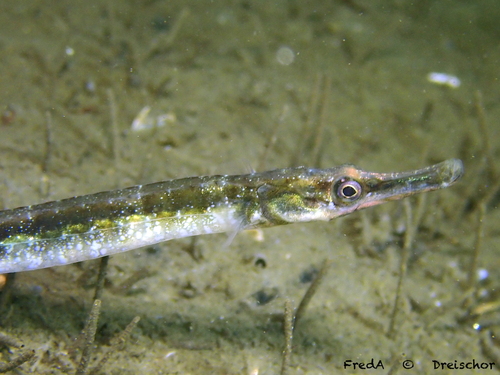 #2139 📷 10
Lesser Pipefish
🇳🇱 Kleine zeenaald
Syngnathus rostellatus
LC 👀 8 in NL #2160 📷 9
Long-snouted Seahorse
🇳🇱 Langsnuitzeepaardje
Hippocampus guttulatus
NT 👀 2 in NL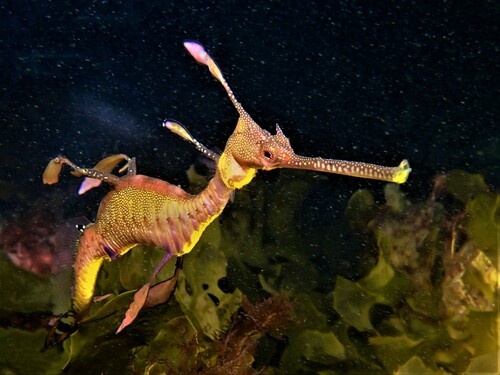 #2329 📷 9
Weedy Seadragon
🇳🇱 Phyllopteryx
Phyllopteryx taeniolatus
VU 🌍 4.5k seen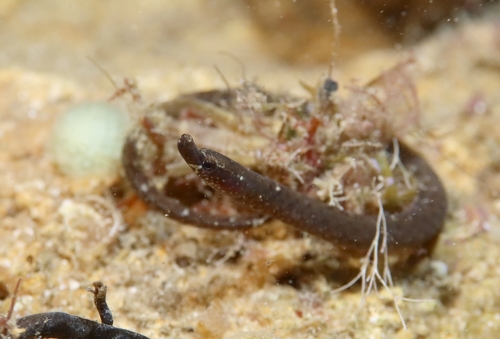 #2233 📷 10
Worm Pipefish
🇳🇱 Kleine wormzeenaald
Nerophis lumbriciformis
LC 🌍 1.7k seen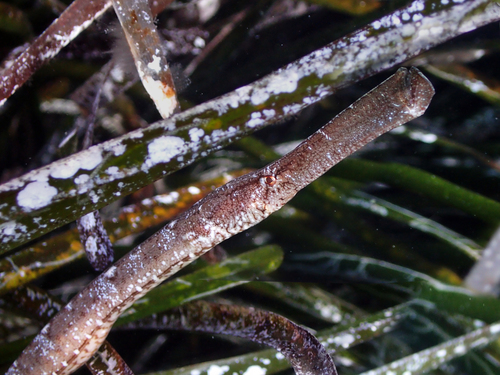 #2250 📷 10
Broadnosed Pipefish
🇳🇱 Trompetterzeenaald
Syngnathus typhle
LC 🌍 1k seen
Sources: iNaturalist taxon 69837, Wikidata Q572365, GBIF 5201032, Wikipedia (EN), Wikipedia (NL). Intro text from Wikipedia (CC BY-SA 4.0).Updated 2026-10-24.