
#1296 · 🐦 birds
Blue-gray Gnatcatcher
🇳🇱 Blauwgrijze Muggenvanger ·Polioptila caerulea


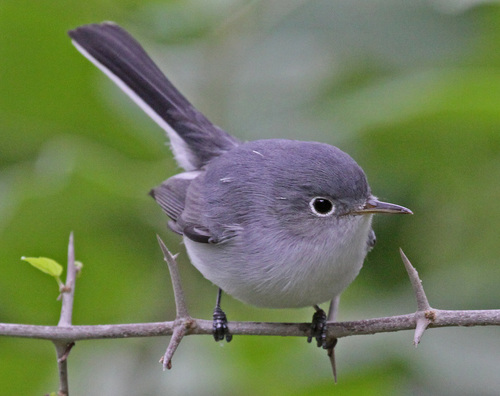
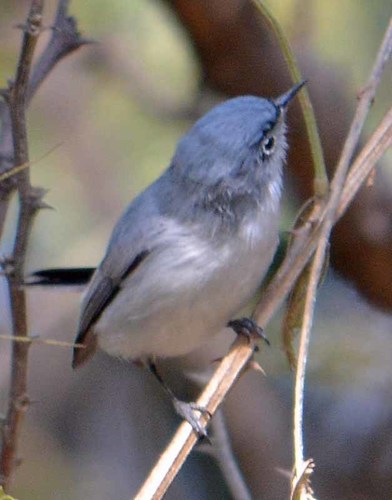
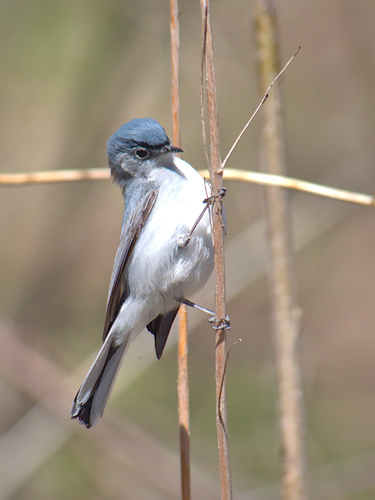
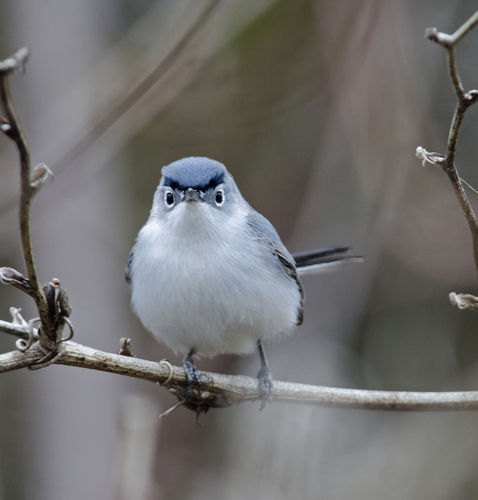
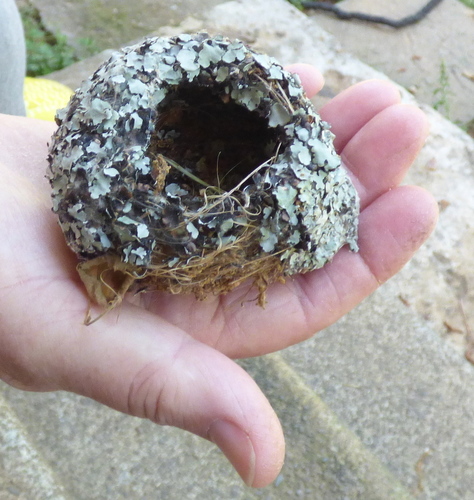
7 photos from iNaturalist (Creative Commons) · credits & licences
what is it?
25 oz). Adult males are blue-gray on the upperparts with white underparts, have a slender dark bill, and a long black tail edged in white. Females are less blue, while juveniles are greenish-gray. Both sexes have a white eye ring.
base stats
Bars compare against all animals on log scales: up to 300,000 Dutch and 600,000 worldwide sightings (the most-seen species), 150 t (blue whale), 30 m and 400 years (Greenland shark).
fun facts
- No confirmed wild sightings in the Netherlands on iNaturalist: you'd have to travel for this one.
- 66,150 observations worldwide on iNaturalist.
- Scientifically named in 1766 (260 years ago).
fact sheet
- English
- Blue-gray Gnatcatcher
- Nederlands
- Blauwgrijze Muggenvanger
- scientific name
- Polioptila caerulea
- class
- Aves
- order
- Passeriformes
- family
- Polioptilidae
- IUCN Red List
- LC · least concern
- sightings in NL
- 0
- sightings worldwide
- 66,150
- GBIF records in NL
- 0
- weight
- —
- length
- —
- lifespan
- —
- named
- 1766
IUCN in Dutch: niet bedreigd. Blank means the sources don't say.
Sources: iNaturalist taxon 7493, Wikidata Q883006, GBIF 2487596, Wikipedia (EN), Wikipedia (NL). Intro text from Wikipedia (CC BY-SA 4.0).Updated 2026-10-24.