
#0541 · 🐦 birds
Great Cormorant
🇳🇱 Aalscholver ·Phalacrocorax carbo

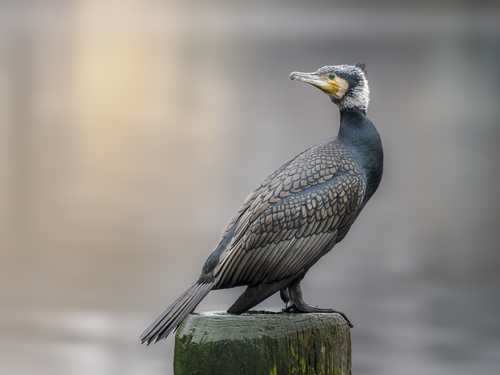
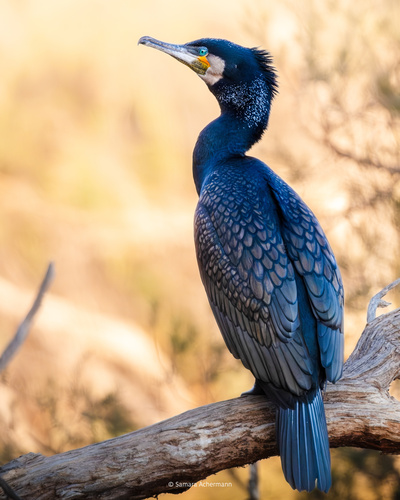

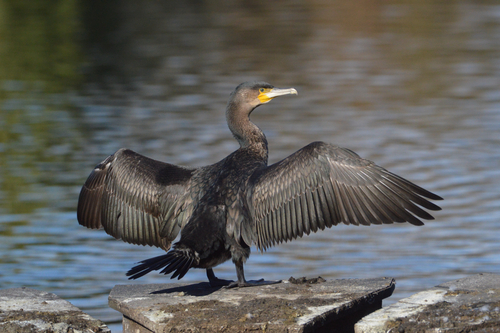
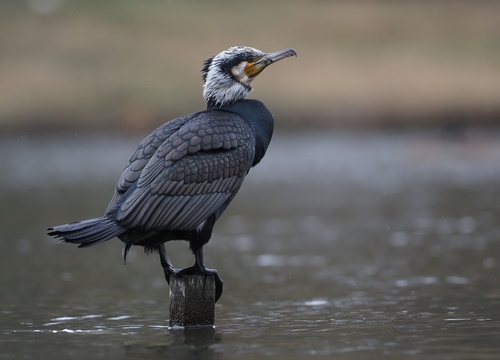

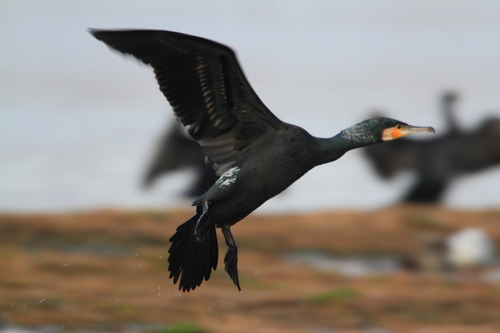
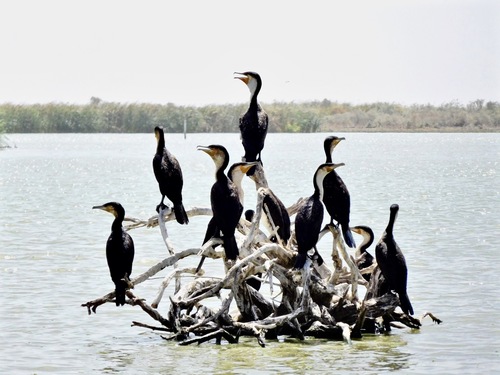
9 photos from iNaturalist (Creative Commons) · credits & licences
what is it?
The great cormorant ( Phalacrocorax carbo ), known as the great black cormorant across the Northern Hemisphere, the black cormorant in Australia, the large cormorant in India and the black shag further south in New Zealand, is a widespread member of the cormorant family of seabirds. The genus name is Latinised Ancient Greek, from φαλακρός ( phalakros , "bald") and κόραξ ( korax , "raven"), and carbo is Latin for "charcoal".
base stats
Bars compare against all animals on log scales: up to 300,000 Dutch and 600,000 worldwide sightings (the most-seen species), 150 t (blue whale), 30 m and 400 years (Greenland shark).
fun facts
- Spotted 4,303 times in the Netherlands on iNaturalist: the #10 most seen of the birds in NL.
- 180,080 observations worldwide on iNaturalist.
- Weighs up to about 2.4 kg.
- Scientifically named in 1758 (268 years ago).
fact sheet
- English
- Great Cormorant
- Nederlands
- Aalscholver
- scientific name
- Phalacrocorax carbo
- class
- Aves
- order
- Suliformes
- family
- Phalacrocoracidae
- IUCN Red List
- LC · least concern
- sightings in NL
- 4,303
- sightings in Europe
- 113,759
- sightings worldwide
- 180,080
- GBIF records in NL
- 737,143
- weight
- 2.4 kg
- length
- —
- lifespan
- —
- named
- 1758
IUCN in Dutch: niet bedreigd. Blank means the sources don't say.
relatives· Phalacrocoracidae
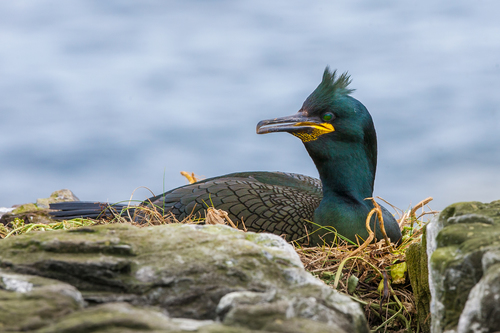 #0747 📷 10
European Shag
🇳🇱 Kuifaalscholver
Gulosus aristotelis
LC 👀 64 in NL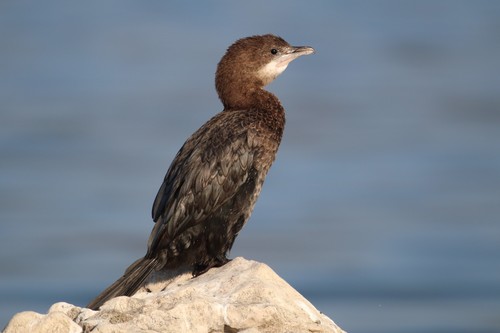 #0822 📷 9
Pygmy Cormorant
🇳🇱 Dwergaalscholver
Microcarbo pygmaeus
LC 👀 18 in NL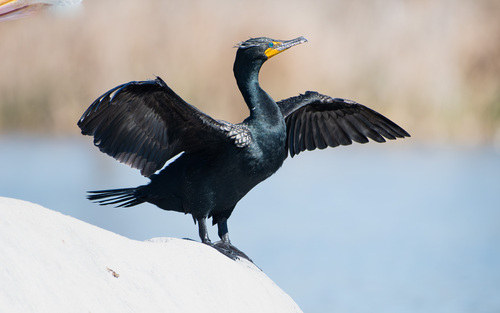 #1026 📷 8
Double-crested Cormorant
🇳🇱 Geoorde Aalscholver
Nannopterum auritum
LC 🌍 218.4k seen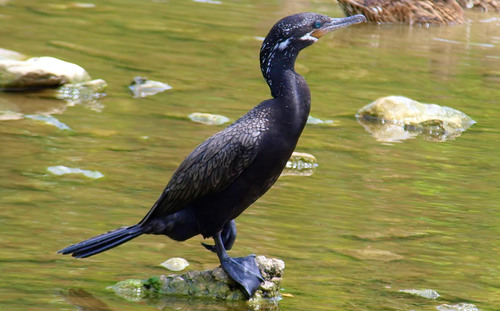 #1294 📷 9
Neotropic Cormorant
🇳🇱 Bigua-aalscholver
Nannopterum brasilianum
LC 🌍 70.9k seen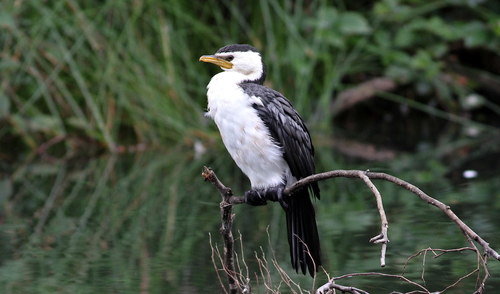 #1344 📷 9
Little Pied Cormorant
🇳🇱 Kleine Bonte Aalscholver
Microcarbo melanoleucos
LC 🌍 36.5k seen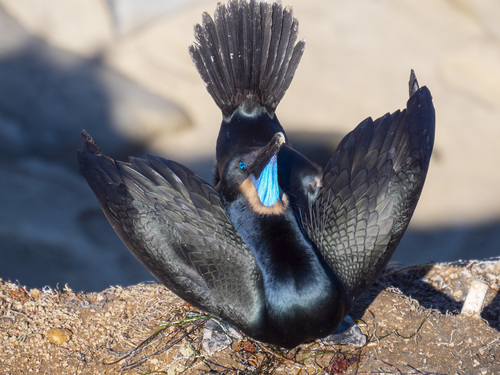 #1407 📷 7
Brandt's Cormorant
🇳🇱 Brandts Aalscholver
Urile penicillatus
LC 🌍 24.1k seen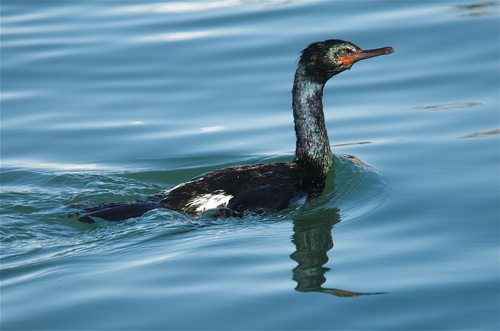 #1457 📷 8
Pelagic Cormorant
🇳🇱 Pelagische Aalscholver
Urile pelagicus
LC 🌍 18.6k seen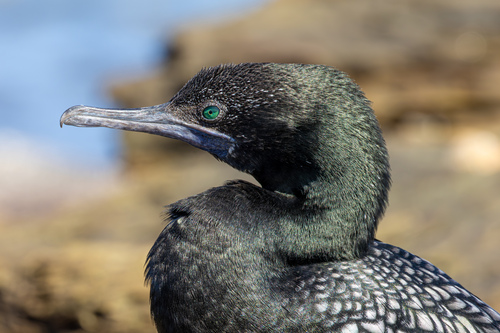 #1460 📷 7
Little Black Cormorant
🇳🇱 Zwarte Aalscholver
Phalacrocorax sulcirostris
LC 🌍 17.9k seen
Sources: iNaturalist taxon 4270, Wikidata Q25440, GBIF 2481890, Wikipedia (EN), Wikipedia (NL). Intro text from Wikipedia (CC BY-SA 4.0).Updated 2026-10-24.