
#1810 · 🦎 reptiles
Many-banded Krait
Bungarus multicinctus
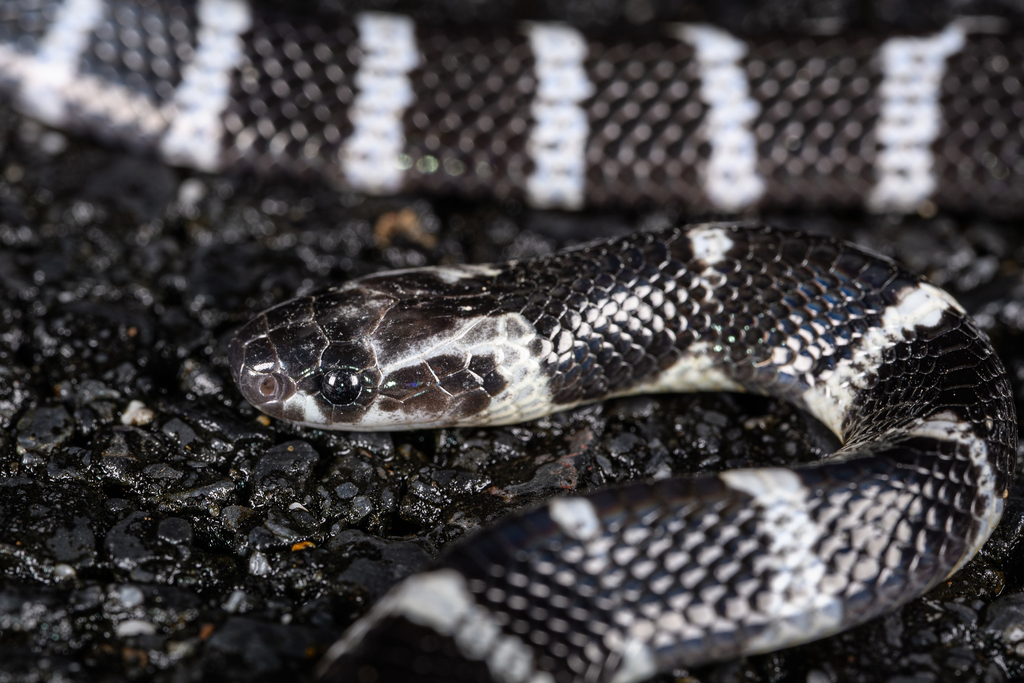
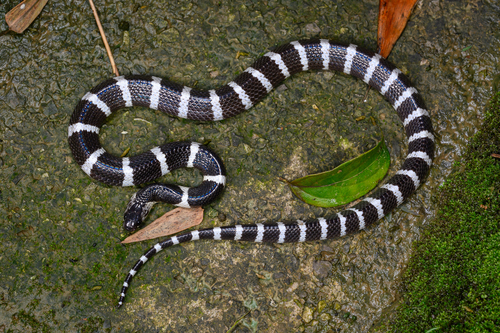
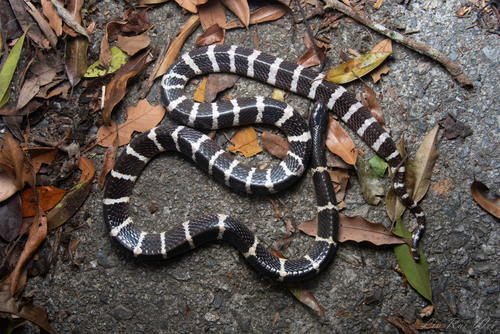

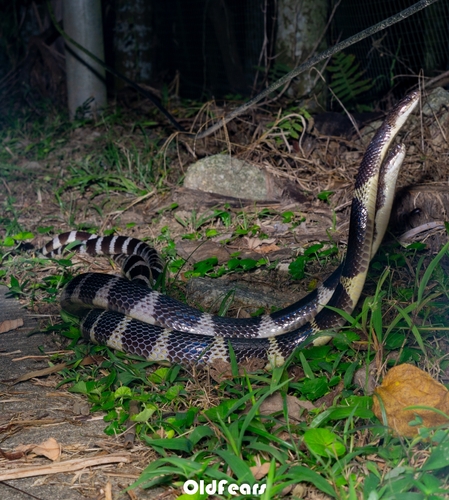
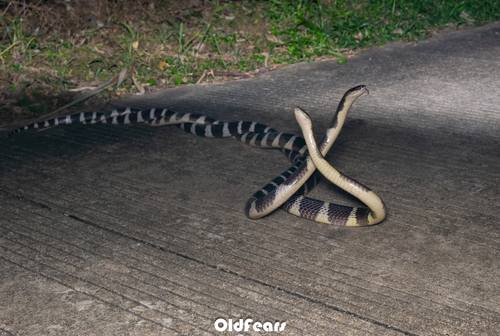
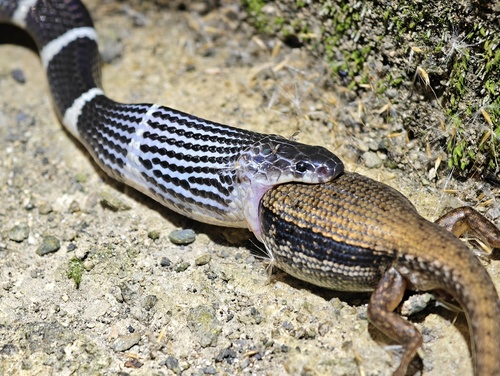
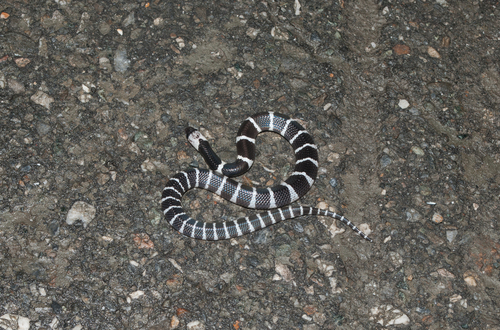
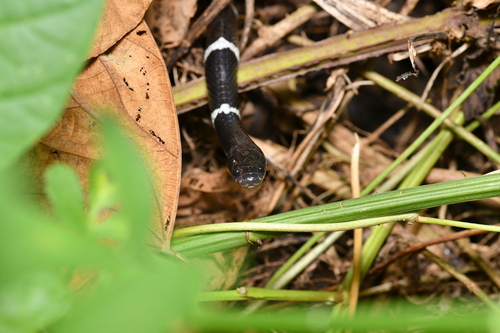
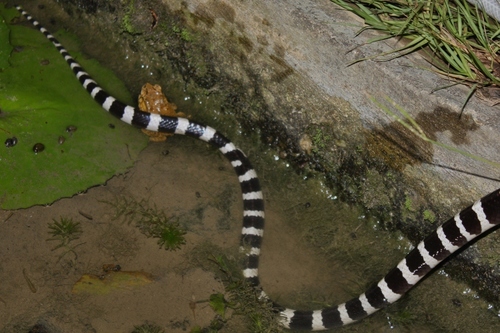
10 photos from iNaturalist (Creative Commons) · credits & licences
- 1. © 藜梓柠 · CC BY-NC 4.0
- 2. © 藜梓柠 · CC BY-NC 4.0
- 3. © Shaway Liu · CC BY-NC 4.0
- 4. © å°å·¥å‹ · CC BY-NC-ND 4.0
- 5. © oldfears · CC BY-NC 4.0
- 6. 104乡道, 海南省, CN:© oldfears · CC BY-NC 4.0
- 7. Taizhou, CN-ZJ, CN:© Kerou · CC BY-NC 4.0
- 8. 台灣花蓮縣:© Liu JimFood · CC BY-NC 4.0
- 9. 721台灣臺南市麻豆區:© Yung-Lun Lin · CC BY 4.0
- 10. Sai Kung, Hong Kong.:© Thomas Brown · CC BY-NC 4.0
what is it?
The many-banded krait ( Bungarus multicinctus ), also known as the Taiwanese krait or the Chinese krait , is a highly venomous species of elapid snake found in much of central and southern China and Southeast Asia. The species was first described by the scientist Edward Blyth in 1861. This species has two known subspecies, the nominate Bungarus multicinctus multicinctus , and Bungarus multicinctus wanghaotingi . The many-banded krait mostly inhabits marshy areas throughout its geographical distribution, though it does occur...
base stats
Bars compare against all animals on log scales: up to 300,000 Dutch and 600,000 worldwide sightings (the most-seen species), 150 t (blue whale), 30 m and 400 years (Greenland shark).
fun facts
- No confirmed wild sightings in the Netherlands on iNaturalist: you'd have to travel for this one.
- 4,072 observations worldwide on iNaturalist.
- Scientifically named by Edward Blyth in 1861 (165 years ago).
- Listed as Vulnerable on the IUCN Red List.
fact sheet
- English
- Many-banded Krait
- scientific name
- Bungarus multicinctus
- class
- Reptilia
- order
- Squamata
- family
- Elapidae
- IUCN Red List
- VU · vulnerable
- sightings in NL
- 0
- sightings worldwide
- 4,072
- GBIF records in NL
- 0
- weight
- —
- length
- —
- lifespan
- —
- named
- 1861 by Edward Blyth
IUCN in Dutch: kwetsbaar. Blank means the sources don't say.
relatives· Elapidae
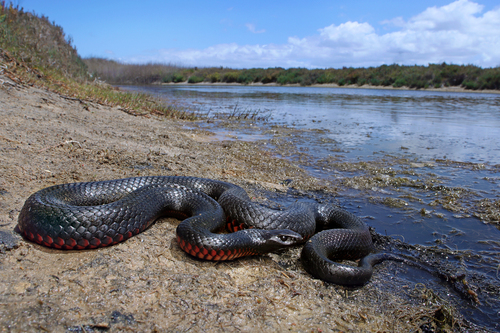 #1710 📷 10
Red-bellied Black Snake
🇳🇱 Zwarte adder
Pseudechis porphyriacus
LC 🌍 8.3k seen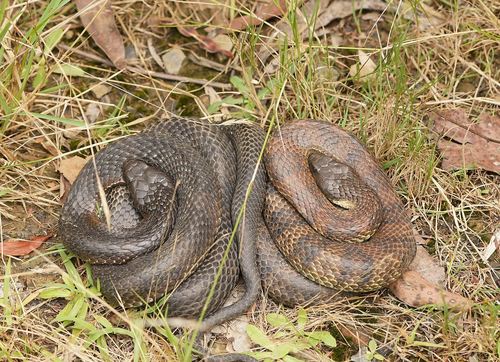 #1763 📷 10
Tiger Snake
🇳🇱 Australische tijgerslang
Notechis scutatus
LC 🌍 5.7k seen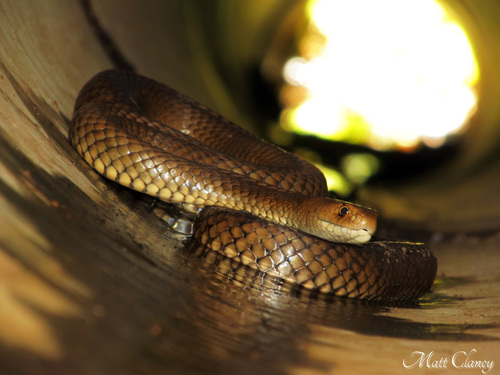 #1771 📷 10
Eastern Brown Snake
🇳🇱 Eastern brown snake
Pseudonaja textilis
LC 🌍 5.4k seen #1783 📷 7
Texas Coralsnake
🇳🇱 Texas coral snake
Micrurus tener
LC 🌍 5k seen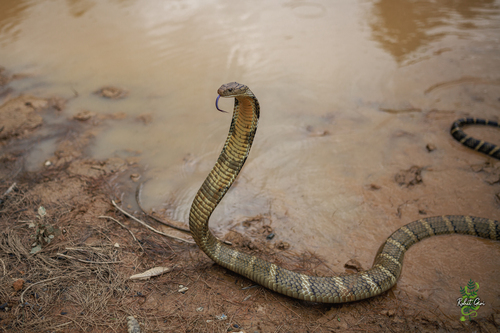 #1834 📷 10
Northern King Cobra
🇳🇱 Koningscobra
Ophiophagus hannah
VU 🌍 657 seen
Sources: iNaturalist taxon 30442, Wikidata Q637161, GBIF 5226813, Wikipedia (EN), Wikipedia (NL). Intro text from Wikipedia (CC BY-SA 4.0).Updated 2026-10-24.