
#4886 · 🪼 jellyfish, starfish, worms & co
Chain Tunicate
🇳🇱 Gewone slingerzakpijp ·Botrylloides violaceus

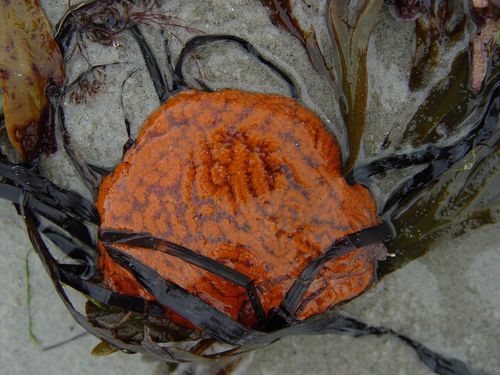
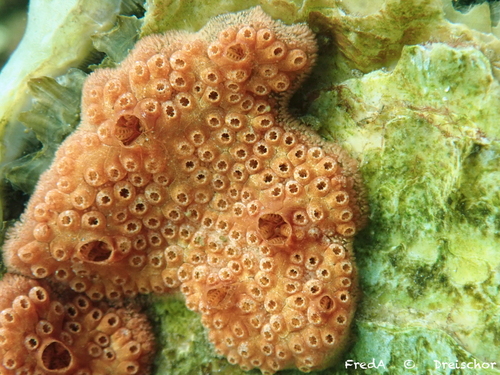 📍 Zeeuwse meren, 158_13_400, NL
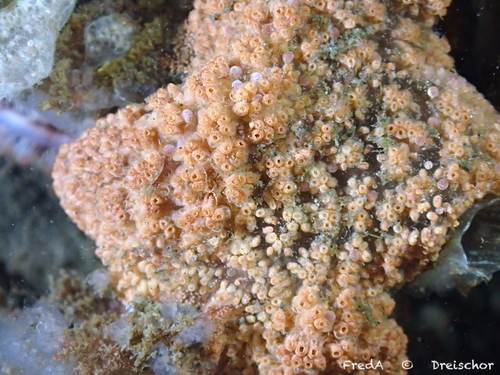 📍 Schouwen-Duiveland, Pays-Bas
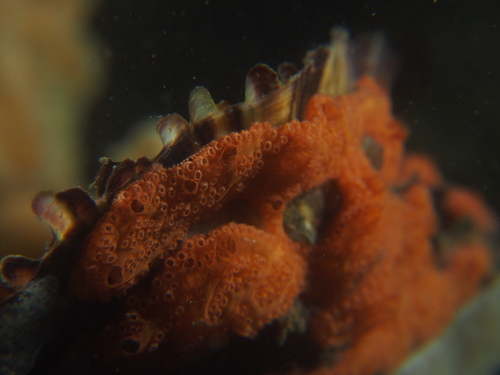 📍 Zeeuwse meren, 158_13_400, NL
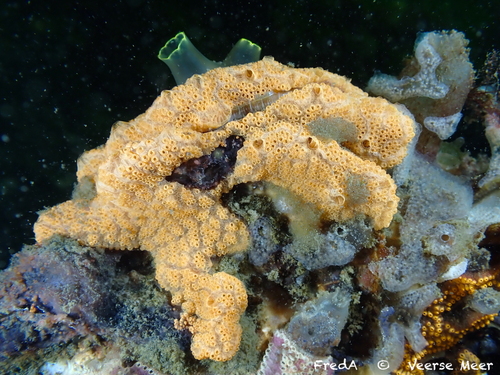 📍 Beveland-Nord, Pays-Bas
10 photos from iNaturalist (Creative Commons) · credits & licences
- 1. © Pauline Walsh Jacobson · CC BY-NC 4.0
- 2. © Cricket Raspet · CC BY 4.0
- 3. © Alex Shure · CC BY-NC 4.0
- 4. © Donna Pomeroy · CC BY-NC 4.0
- 5. © Robin Gwen Agarwal · CC BY-NC 4.0
- 6. © batwrangler · CC BY-NC-ND 4.0
- 7. Zeeuwse meren, 158_13_400, NL:© Frédéric ANDRE · CC BY-NC 4.0
- 8. Schouwen-Duiveland, Pays-Bas:© Frédéric ANDRE · CC BY-NC 4.0
- 9. Zeeuwse meren, 158_13_400, NL:© Dennis Rabeling · CC BY-NC-ND 4.0
- 10. Beveland-Nord, Pays-Bas:© Frédéric ANDRE · CC BY-NC 4.0
what is it?
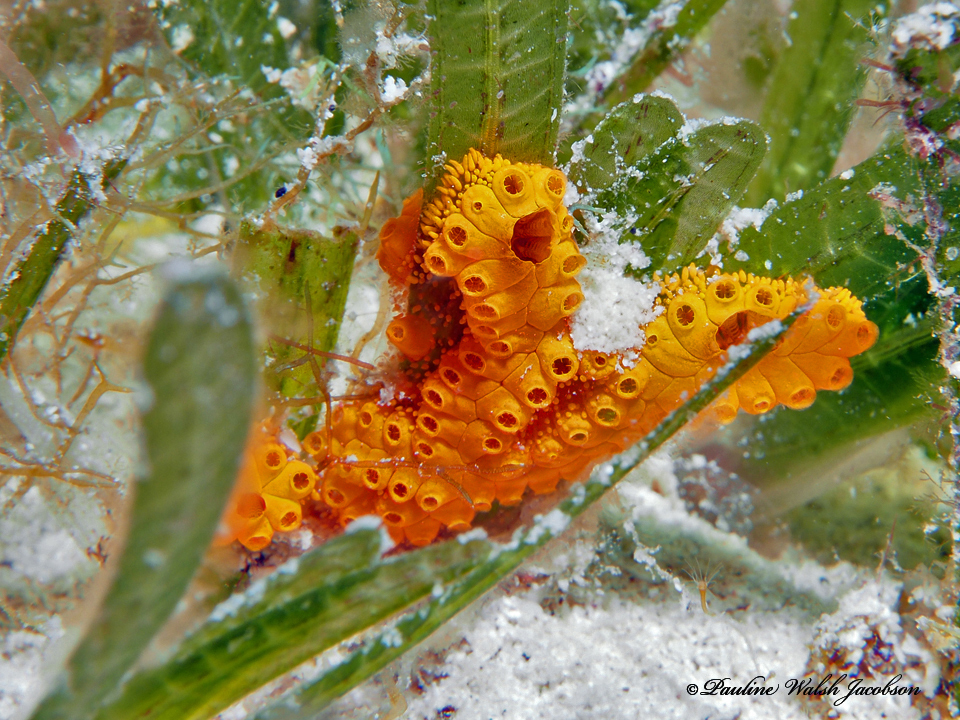
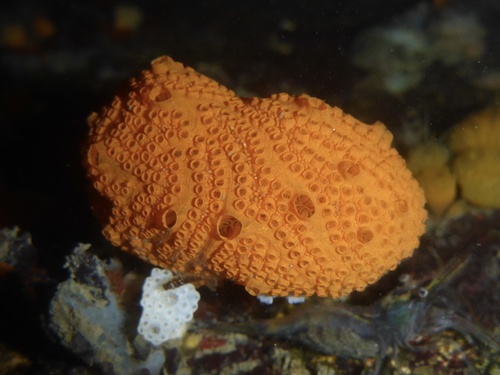
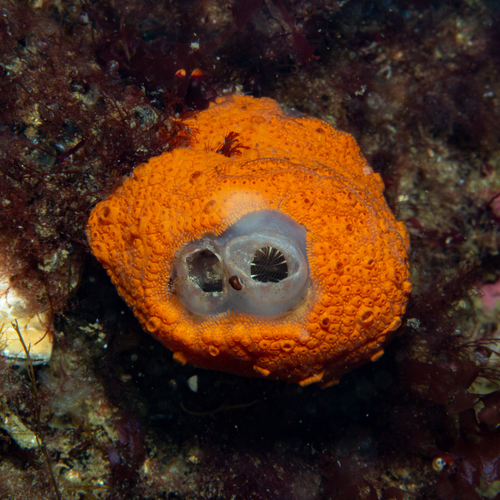
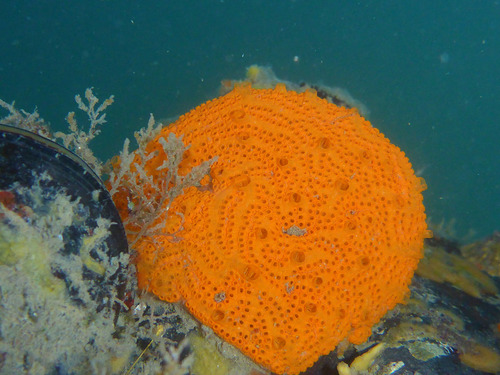
Botrylloides violaceus is a colonial tunicate of the genus Botrylloides . Its native range is in the Northwest Pacific from Southern China to Japan and Siberia. Colonies attach and grow on solid surfaces and substrates, and consist of individuals arranged in twisting rows. Outside its native range, it is considered an invasive species and are becoming more common in coastal waters of North America and other waters around the world, likely being spread by shipping industries.
base stats
Bars compare against all animals on log scales: up to 300,000 Dutch and 600,000 worldwide sightings (the most-seen species), 150 t (blue whale), 30 m and 400 years (Greenland shark).
fun facts
- Spotted 29 times in the Netherlands on iNaturalist: the #40 most seen of the jellyfish, starfish, worms & co in NL.
- 6,403 observations worldwide on iNaturalist.
- Not originally Dutch: it was introduced to the Netherlands.
fact sheet
- English
- Chain Tunicate
- Nederlands
- Gewone slingerzakpijp
- scientific name
- Botrylloides violaceus
- class
- Ascidiacea
- order
- Stolidobranchia
- family
- Styelidae
- in NL
- introduced
- sightings in NL
- 29
- sightings in Europe
- 229
- sightings worldwide
- 6,403
- GBIF records in NL
- 144
- weight
- —
- length
- —
- lifespan
- —
relatives· Styelidae
 #4872 📷 10
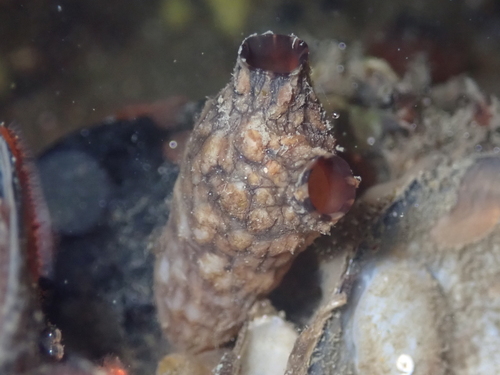
Stalked Sea Squirt
🇳🇱 Japanse knotszakpijp
Styela clava
👀 56 in NL #4873 📷 9
San Diego Sea Squirt
Botrylloides diegensis
👀 56 in NL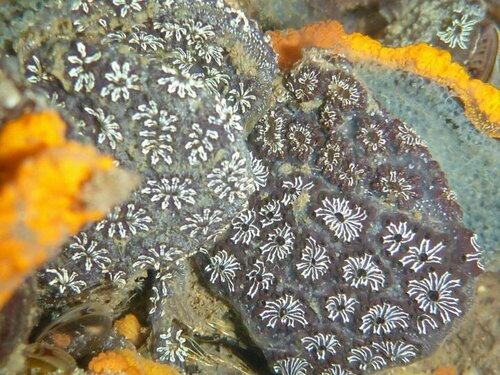 #4890 📷 7
Star Tunicate
🇳🇱 Gesterde geleikorst
Botryllus schlosseri
👀 25 in NL #4933 📷 10
ladder ascidian
🇳🇱 Tweekleurige slingerzakpijp
Botrylloides leachii
👀 8 in NL
Sources: iNaturalist taxon 81776, Wikidata Q4948812, GBIF 4354941, Wikipedia (EN), Wikipedia (NL). Intro text from Wikipedia (CC BY-SA 4.0).Updated 2026-10-24.