
#0411 · 🦊 mammals
Masked Palm Civet
🇳🇱 Gemaskerde Larvenroller ·Paguma larvata

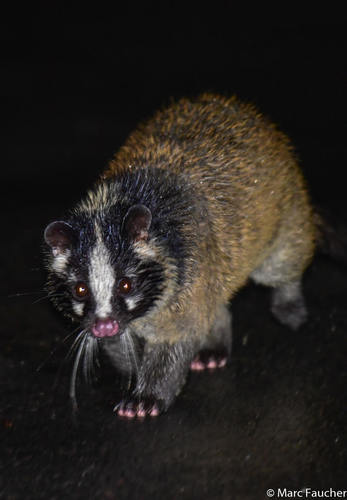


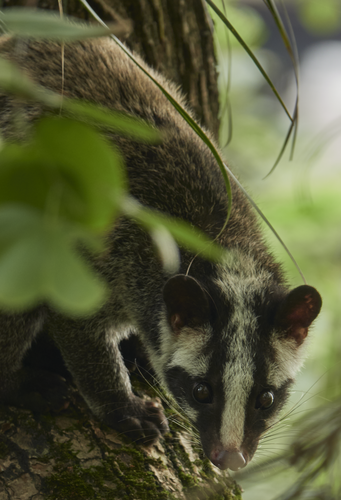

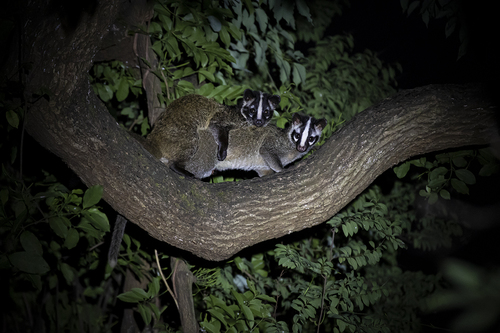
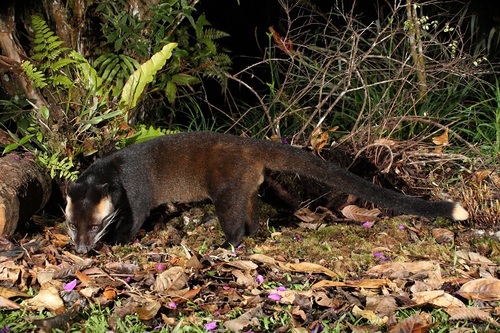
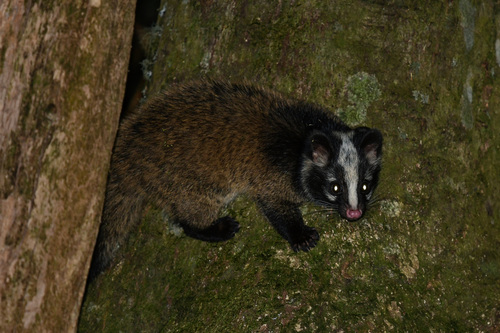
10 photos from iNaturalist (Creative Commons) · credits & licences
- 1. © 57Andrew · CC BY-NC-ND 4.0
- 2. © pfaucher · CC BY-NC 4.0
- 3. © Carolus Kwok · CC BY-NC 4.0
- 4. © 57Andrew · CC BY-NC-ND 4.0
- 5. © Denise Chan · CC BY-SA 4.0
- 6. © Carolus Kwok · CC BY-NC 4.0
- 7. Soidewa Forest Trail:© Rejoice Gassah · CC BY 4.0
- 8. Lung Fu Shan, Hong Kong:© matthewkwan · CC BY-NC-ND 4.0
- 9. Fraser's Hill, Pahang, Malaysia:© dhfischer · CC BY 4.0
- 10. 424台灣台中市和平區:© usaviah · CC BY-NC 4.0
what is it?
The masked palm civet or gem-faced civet ( Paguma larvata ) is a civet species native to the Indian Subcontinent and Southeast Asia. It is classified by IUCN in 2008 as Least Concern as it occurs in many protected areas, is tolerant to some degree of habitat modification, and widely distributed with presumed large populations that are unlikely to be declining.
base stats
Bars compare against all animals on log scales: up to 300,000 Dutch and 600,000 worldwide sightings (the most-seen species), 150 t (blue whale), 30 m and 400 years (Greenland shark).
fun facts
- No confirmed wild sightings in the Netherlands on iNaturalist: you'd have to travel for this one.
- 2,931 observations worldwide on iNaturalist.
- Scientifically named by Charles Hamilton Smith in 1827 (199 years ago).
fact sheet
- English
- Masked Palm Civet
- Nederlands
- Gemaskerde Larvenroller
- scientific name
- Paguma larvata
- class
- Mammalia
- order
- Carnivora
- family
- Viverridae
- IUCN Red List
- LC · least concern
- sightings in NL
- 0
- sightings worldwide
- 2,931
- GBIF records in NL
- 1
- weight
- —
- length
- —
- lifespan
- —
- named
- 1827 by Charles Hamilton Smith
IUCN in Dutch: niet bedreigd. Blank means the sources don't say.
relatives· Viverridae

Sources: iNaturalist taxon 41625, Wikidata Q626049, GBIF 2434654, Wikipedia (EN), Wikipedia (NL). Intro text from Wikipedia (CC BY-SA 4.0).Updated 2026-10-24.