
#0386 · 🦊 mammals
Giant Anteater
🇳🇱 Reuzenmiereneter ·Myrmecophaga tridactyla

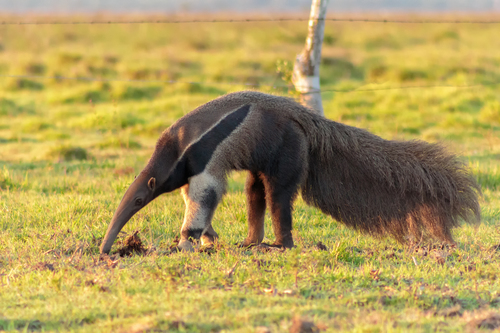


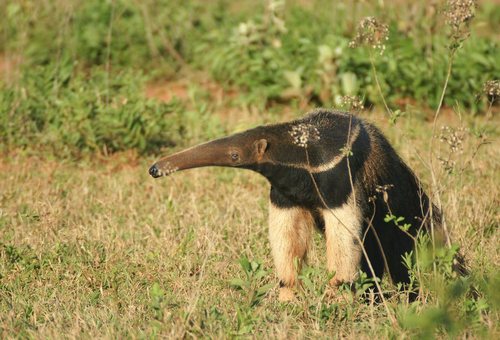
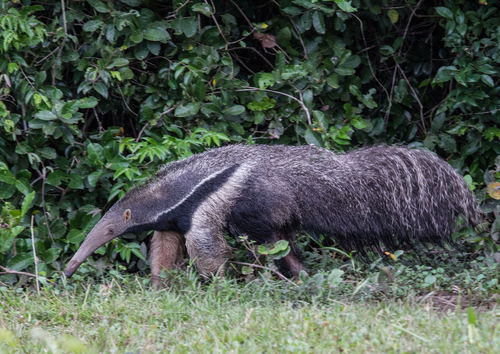
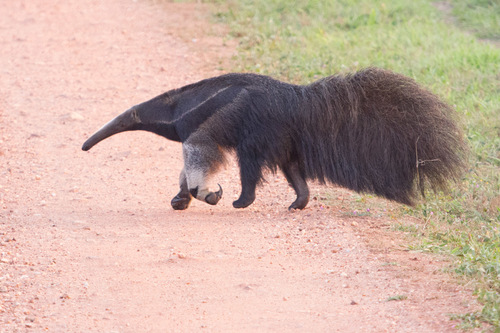
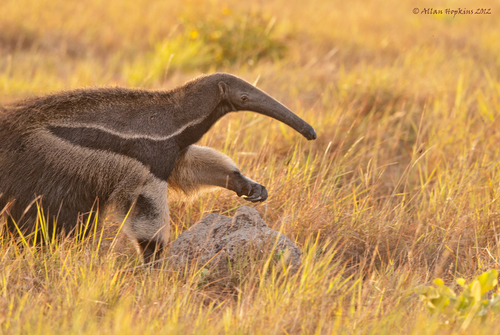
8 photos from iNaturalist (Creative Commons) · credits & licences
what is it?
The giant anteater ( Myrmecophaga tridactyla ), also known as the ant bear , is a large insectivorous mammal native to Central and South America. It is one of four living species of anteaters and is classified with sloths in the order Pilosa. This species is mostly terrestrial, in contrast to other living anteaters and sloths, which are arboreal or semiarboreal. 12 ft) in length, with weights of 33–41 kg (73–90 lb)...
base stats
Bars compare against all animals on log scales: up to 300,000 Dutch and 600,000 worldwide sightings (the most-seen species), 150 t (blue whale), 30 m and 400 years (Greenland shark).
fun facts
- No confirmed wild sightings in the Netherlands on iNaturalist: you'd have to travel for this one.
- 3,420 observations worldwide on iNaturalist.
- Weighs up to about 1.4 kg.
- Scientifically named in 1758 (268 years ago).
- Listed as Vulnerable on the IUCN Red List.
fact sheet
- English
- Giant Anteater
- Nederlands
- Reuzenmiereneter
- scientific name
- Myrmecophaga tridactyla
- class
- Mammalia
- order
- Pilosa
- family
- Myrmecophagidae
- IUCN Red List
- VU · vulnerable
- sightings in NL
- 0
- sightings worldwide
- 3,420
- GBIF records in NL
- 0
- weight
- 1.4 kg
- length
- —
- lifespan
- —
- named
- 1758
IUCN in Dutch: kwetsbaar. Blank means the sources don't say.
relatives· Myrmecophagidae
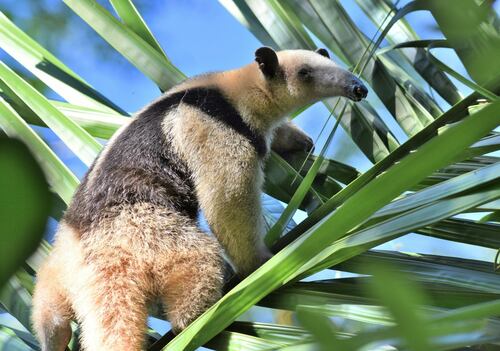
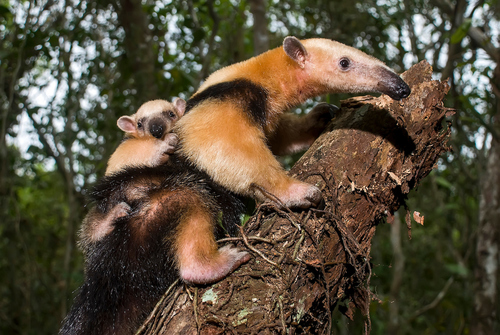
Sources: iNaturalist taxon 47107, Wikidata Q203033, GBIF 2436346, Wikipedia (EN), Wikipedia (NL). Intro text from Wikipedia (CC BY-SA 4.0).Updated 2026-10-24.