
#0322 · 🦊 mammals
Ocelot
Leopardus pardalis
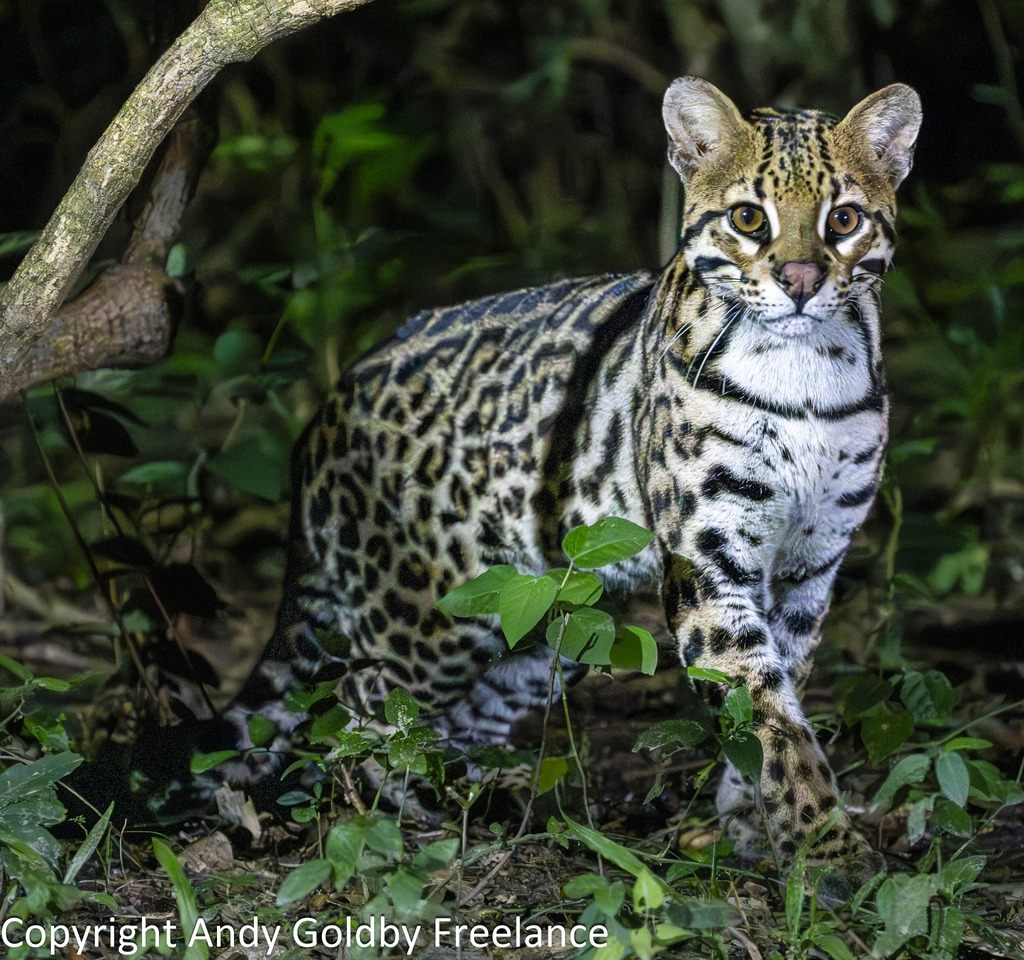
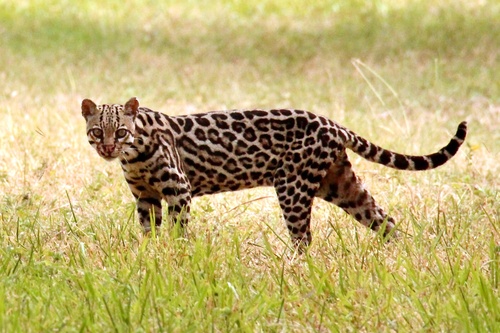
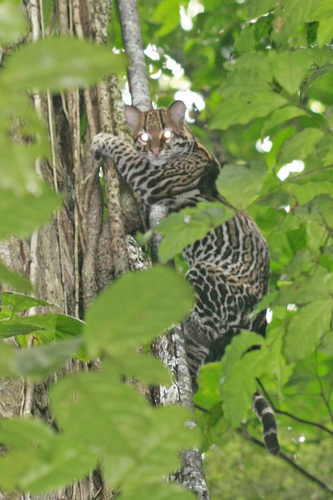
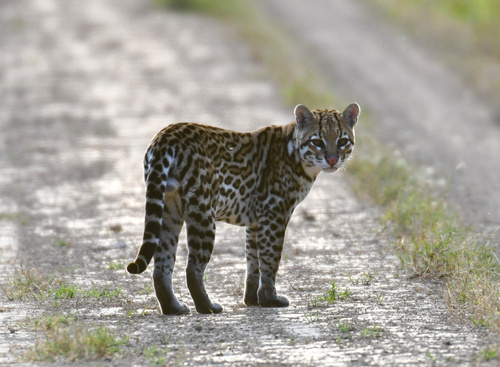
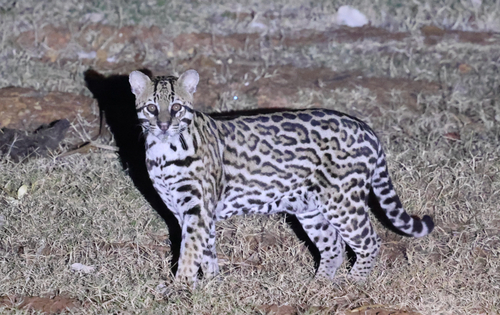


7 photos from iNaturalist (Creative Commons) · credits & licences
what is it?
The ocelot (/ˈɒsəlɒt/; Leopardus pardalis ) is a small wild cat native to the southwestern United States, Mexico, and Central and South America. This medium-sized cat is characterized by solid black spots and streaks on its coat, round ears, and white neck and undersides. 5 kg (18 and 34 lb) and reaches 40–50 cm (16–20 in) at the shoulders. It was first described by Carl Linnaeus in 1758. Two subspecies are recognized: L. p. pardalis and...
base stats
Bars compare against all animals on log scales: up to 300,000 Dutch and 600,000 worldwide sightings (the most-seen species), 150 t (blue whale), 30 m and 400 years (Greenland shark).
fun facts
- No confirmed wild sightings in the Netherlands on iNaturalist: you'd have to travel for this one.
- 5,351 observations worldwide on iNaturalist.
- Weighs up to about 13.5 kg.
- Scientifically named in 1758 (268 years ago).
fact sheet
- English
- Ocelot
- Nederlands
- Ocelot
- scientific name
- Leopardus pardalis
- class
- Mammalia
- order
- Carnivora
- family
- Felidae
- IUCN Red List
- LC · least concern
- sightings in NL
- 0
- sightings worldwide
- 5,351
- GBIF records in NL
- 0
- weight
- 13.5 kg
- length
- —
- lifespan
- —
- named
- 1758
IUCN in Dutch: niet bedreigd. Blank means the sources don't say.
relatives· Felidae
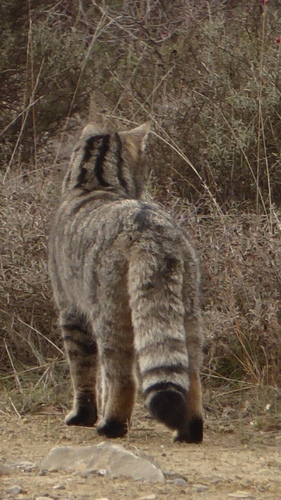 #0070 📷 8
European Wildcat
🇳🇱 Wilde Kat
Felis silvestris
LC 👀 1 in NL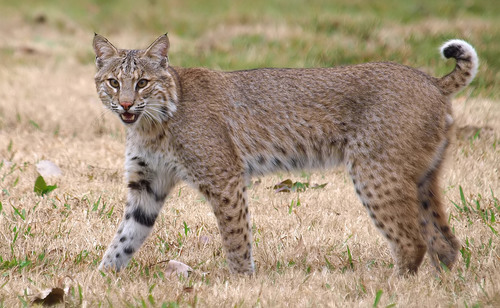 #0206 📷 8
Bobcat
🇳🇱 Rode Lynx
Lynx rufus
LC 🌍 56.3k seen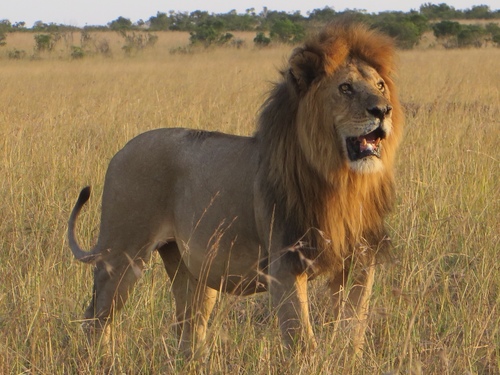 #0224 📷 9
Lion
🇳🇱 Leeuw
Panthera leo
VU 🌍 25.8k seen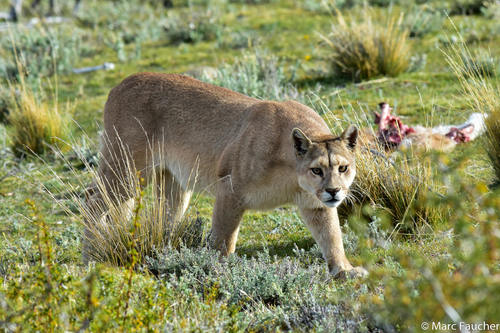 #0235 📷 8
Mountain Lion
🇳🇱 Poema
Puma concolor
LC 🌍 18.5k seen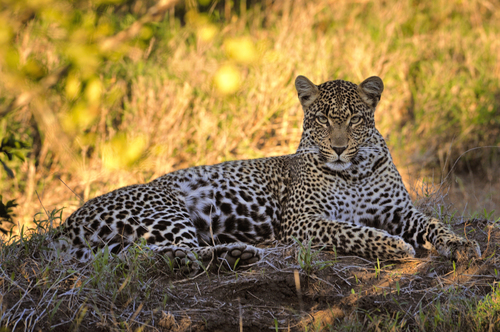 #0091 📷 10
Leopard
🇳🇱 Luipaard
Panthera pardus
VU 🌍 14.8k seen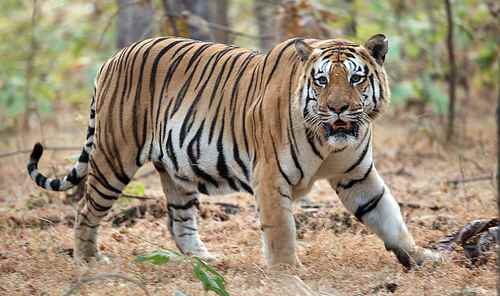 #0277 📷 9
Tiger
🇳🇱 Tijger
Panthera tigris
EN 🌍 9.2k seen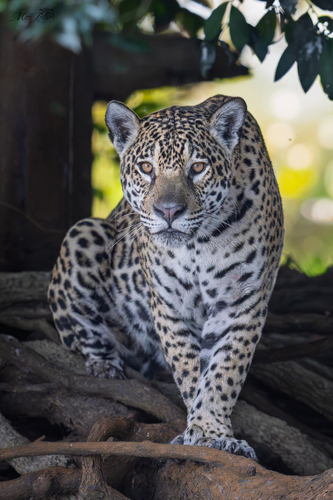 #0278 📷 8
Jaguar
Panthera onca
NT 🌍 9.1k seen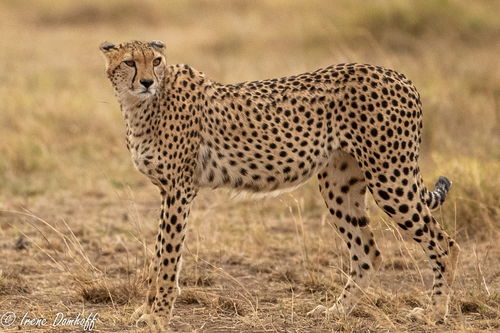 #0293 📷 7
Cheetah
🇳🇱 Jachtluipaard
Acinonyx jubatus
VU 🌍 7.6k seen
Sources: iNaturalist taxon 41997, Wikidata Q33261, GBIF 2434982, Wikipedia (EN), Wikipedia (NL). Intro text from Wikipedia (CC BY-SA 4.0).Updated 2026-10-24.