
#0085 · 🦊 mammals
Capybara
🇳🇱 Capibara ·Hydrochoerus hydrochaeris

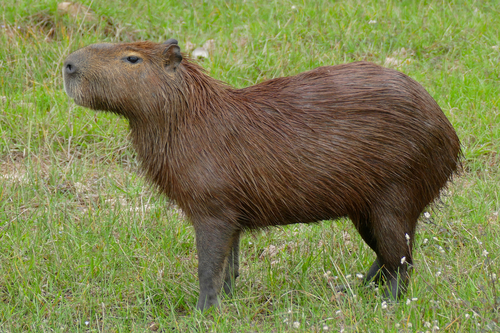

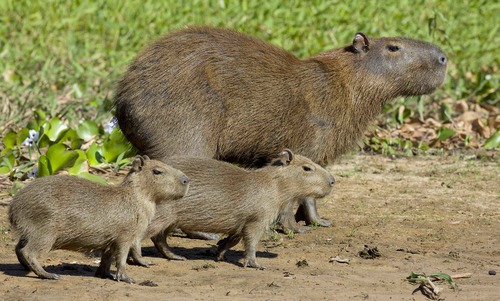
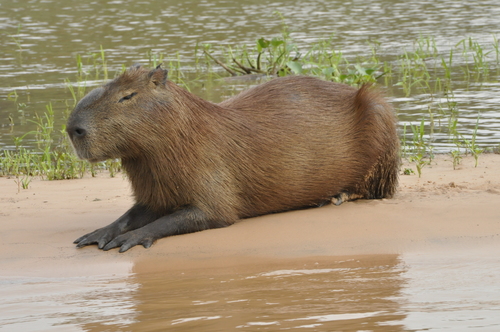
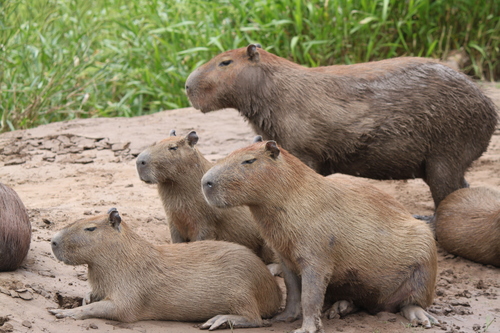
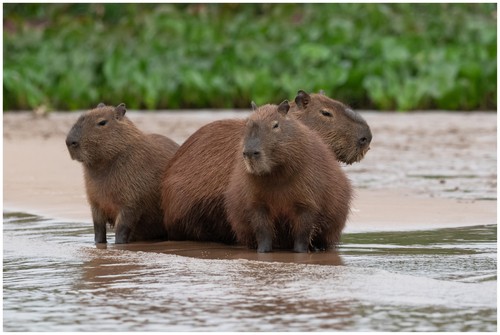
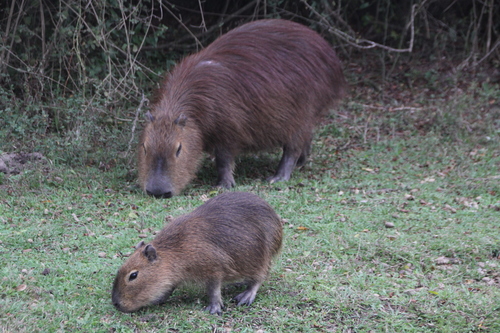
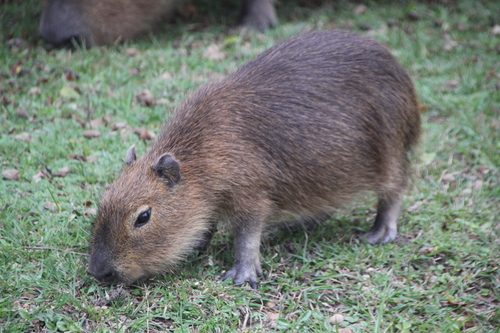
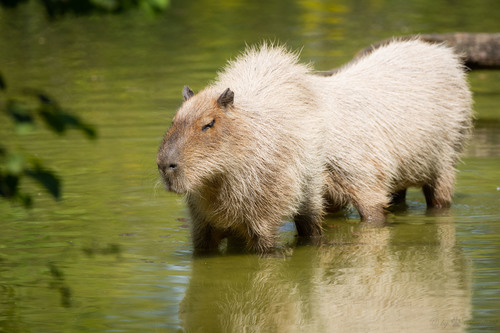
10 photos from iNaturalist (Creative Commons) · credits & licences
- 1. © Carlos Sanchez · CC BY-NC 4.0
- 2. © Bernard DUPONT · CC BY-SA 4.0
- 3. © Michelle Delaloye · CC BY-NC 4.0
- 4. © Douglas Trent · CC BY-NC 4.0
- 5. © Bruce Kirchoff · CC BY 4.0
- 6. © Mike Ellis · CC BY-NC 4.0
- 7. © Martha de Jong-Lantink · CC BY-NC-ND 4.0
- 8. © Pablo Fraire · CC BY-NC 4.0
- 9. © Pablo Fraire · CC BY-NC 4.0
- 10. © Cloudtail the Snow Leopard · CC BY-NC-ND 4.0
what is it?
The capybara ( Hydrochoerus hydrochaeris ) is the largest living rodent in the world. Also called chigüire and carpincho , it is a member of the genus Hydrochoerus , of which the only other extant member is the lesser capybara ( Hydrochoerus isthmius ). Its close relatives include guinea pigs and rock cavies, and it is more distantly related to the agouti, the chinchilla, and the coypu. Native to South America, the capybara inhabits savannas and dense forests and lives near bodies...
base stats
Bars compare against all animals on log scales: up to 300,000 Dutch and 600,000 worldwide sightings (the most-seen species), 150 t (blue whale), 30 m and 400 years (Greenland shark).
fun facts
- No confirmed wild sightings in the Netherlands on iNaturalist: you'd have to travel for this one.
- 18,985 observations worldwide on iNaturalist.
- Weighs up to about 48.9 kg.
- Scientifically named in 1766 (260 years ago).
fact sheet
- English
- Capybara
- Nederlands
- Capibara
- scientific name
- Hydrochoerus hydrochaeris
- class
- Mammalia
- order
- Rodentia
- family
- Caviidae
- IUCN Red List
- LC · least concern
- sightings in NL
- 0
- sightings in Europe
- 1
- sightings worldwide
- 18,985
- GBIF records in NL
- 1
- weight
- 48.9 kg
- length
- —
- lifespan
- —
- named
- 1766
IUCN in Dutch: niet bedreigd. Blank means the sources don't say.
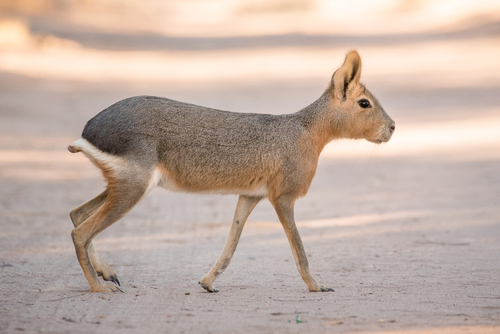
relatives· Caviidae

Sources: iNaturalist taxon 74442, Wikidata Q131538, GBIF 5786666, Wikipedia (EN), Wikipedia (NL). Intro text from Wikipedia (CC BY-SA 4.0).Updated 2026-10-24.