
#3044 · 🦋 butterflies & moths
Duke of Burgundy
🇳🇱 Sleutelbloemvlinder ·Hamearis lucina
🦋 Butterflies & moths 📍 in Europe, not in NL
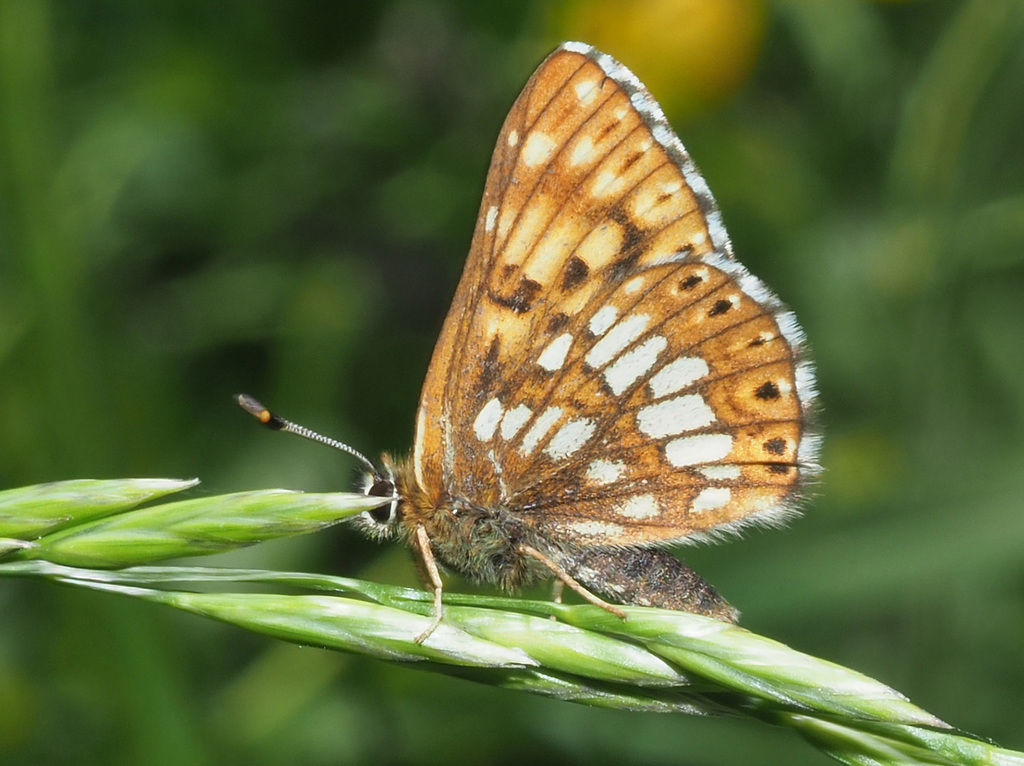


9 photos from iNaturalist (Creative Commons) · credits & licences
- 1. © Felix Riegel · CC BY-NC 4.0
- 2. © Felix Riegel · CC BY-NC 4.0
- 3. © Maurizio Sighele · CC BY-NC-ND 4.0
- 4. © Jeroen Van Akkeren · CC BY-NC 4.0
- 5. © Luca Boscain · CC BY-NC 4.0
- 6. © frankielee91 · CC BY-NC 4.0
- 7. © Philip Mark Osso · CC BY-NC 4.0
- 8. © djhiker · CC BY-NC 4.0
- 9. © Max Kindler · CC BY-NC-ND 4.0
what is it?
Hamearis lucina , the Duke of Burgundy , the only member of the genus Hamearis , is a European butterfly in the family Riodinidae. For many years, it was known as the "Duke of Burgundy fritillary", because the adult's chequered pattern is strongly reminiscent of "true" fritillaries of the family Nymphalidae.
base stats
Bars compare against all animals on log scales: up to 300,000 Dutch and 600,000 worldwide sightings (the most-seen species), 150 t (blue whale), 30 m and 400 years (Greenland shark).
fun facts
- No confirmed wild sightings in the Netherlands on iNaturalist: you'd have to travel for this one.
- 5,502 observations worldwide on iNaturalist.
- Scientifically named in 1758 (268 years ago).
fact sheet
- English
- Duke of Burgundy
- Nederlands
- Sleutelbloemvlinder
- scientific name
- Hamearis lucina
- class
- Insecta
- order
- Lepidoptera
- family
- Riodinidae
- sightings in NL
- 0
- sightings in Europe
- 5,254
- sightings worldwide
- 5,502
- GBIF records in NL
- 1
- weight
- —
- length
- —
- lifespan
- —
- named
- 1758
Sources: iNaturalist taxon 133154, Wikidata Q1114576, GBIF 1934693, Wikipedia (EN), Wikipedia (NL). Intro text from Wikipedia (CC BY-SA 4.0).Updated 2026-10-24.