
#1130 · 🐦 birds
Emu
🇳🇱 Emoe ·Dromaius novaehollandiae

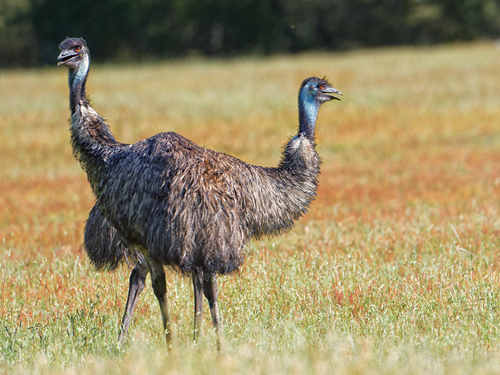
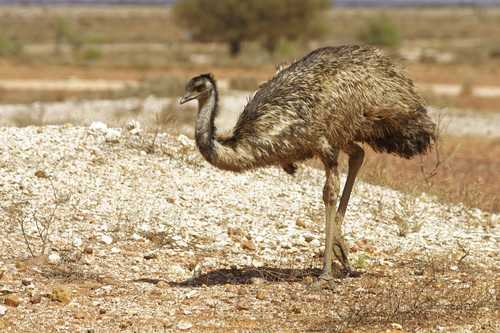

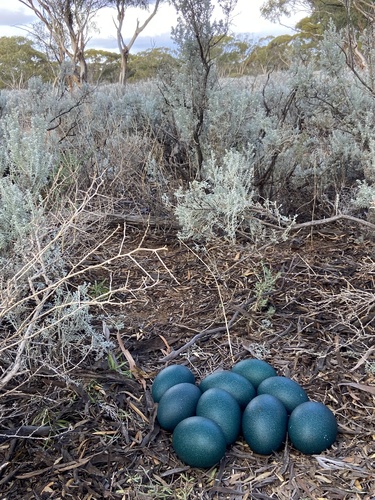
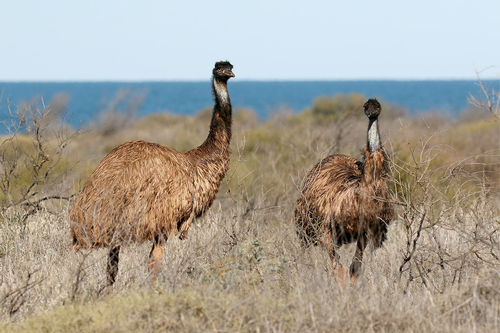
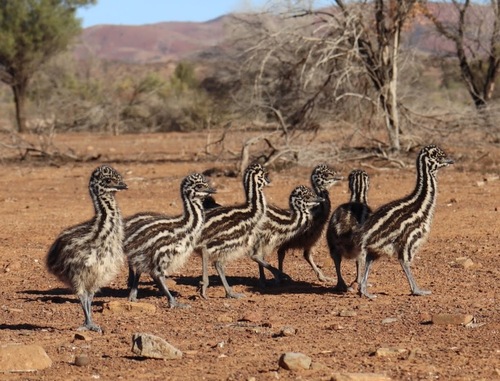
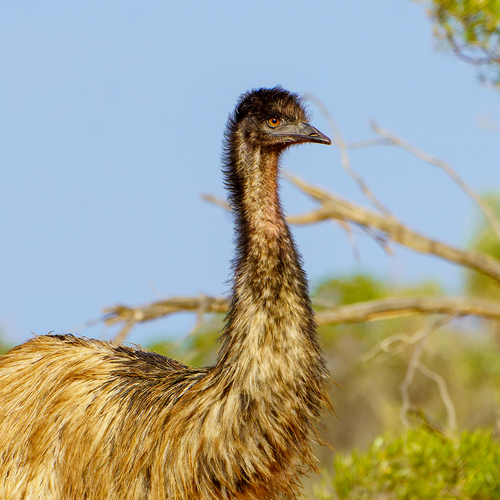


10 photos from iNaturalist (Creative Commons) · credits & licences
- 1. © David Cook · CC BY-NC 4.0
- 2. © audiodam · CC BY-NC-SA 4.0
- 3. © Darryl Kirby · CC BY-NC-SA 4.0
- 4. © pdubbin · CC BY-NC 4.0
- 5. © philipgj · CC BY-NC 4.0
- 6. © patrickkavanagh · CC BY 4.0
- 7. © Abbey Dean · CC BY-NC 4.0
- 8. © jimchurches · CC BY-NC-SA 4.0
- 9. © Arthur Chapman · CC BY-NC-SA 4.0
- 10. © JR Ferrer-Paris · CC BY 4.0
what is it?
The emu ( Dromaius novaehollandiae ) is the second-largest living bird by height, after its ratite relative, the ostrich. It is endemic to Australia where it is the largest native bird and the only extant member of the genus Dromaius . The emu's range covers most of mainland Australia, but the Tasmanian emu and King Island emu subspecies became extinct after the European settlement of Australia in 1788. The bird is sufficiently common for it to be rated as...
base stats
Bars compare against all animals on log scales: up to 300,000 Dutch and 600,000 worldwide sightings (the most-seen species), 150 t (blue whale), 30 m and 400 years (Greenland shark).
fun facts
- No confirmed wild sightings in the Netherlands on iNaturalist: you'd have to travel for this one.
- 13,395 observations worldwide on iNaturalist.
- Weighs up to about 38.3 kg.
- Scientifically named by John Latham in 1790 (236 years ago).
fact sheet
- English
- Emu
- Nederlands
- Emoe
- scientific name
- Dromaius novaehollandiae
- class
- Aves
- order
- Casuariiformes
- family
- Casuariidae
- IUCN Red List
- LC · least concern
- sightings in NL
- 0
- sightings in Europe
- 1
- sightings worldwide
- 13,395
- GBIF records in NL
- 15
- weight
- 38.3 kg
- length
- —
- lifespan
- —
- named
- 1790 by John Latham
IUCN in Dutch: niet bedreigd. Blank means the sources don't say.
Sources: iNaturalist taxon 20504, Wikidata Q93208, GBIF 2495134, Wikipedia (EN), Wikipedia (NL). Intro text from Wikipedia (CC BY-SA 4.0).Updated 2026-10-24.