
#0809 · 🐦 birds
Zitting Cisticola
🇳🇱 Graszanger ·Cisticola juncidis


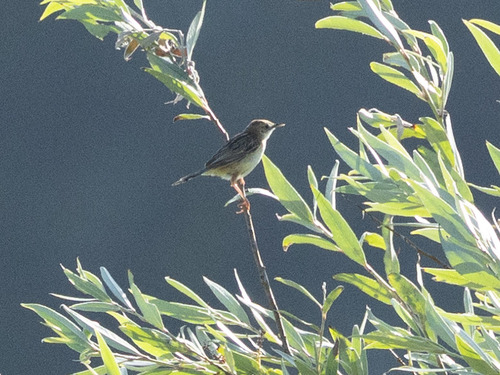 📍 Zuid-Holland, NL
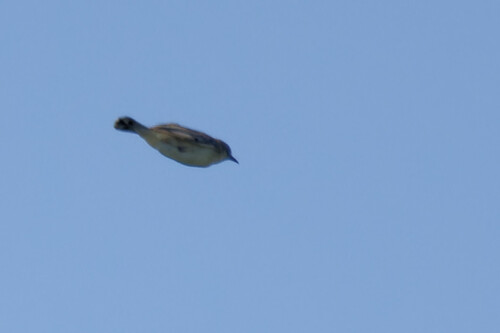 📍 Hollands Kroon, Netherlands
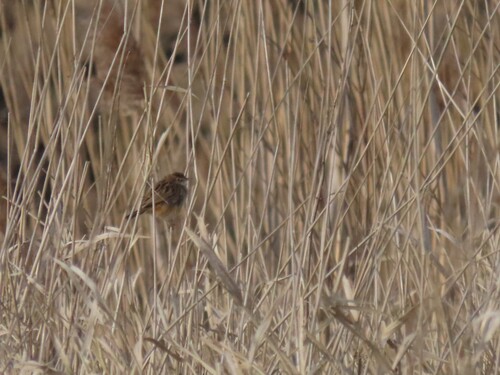 📍 Hilversum, Netherlands
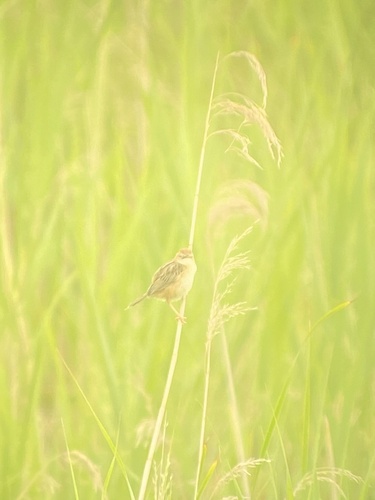 📍 Meijendel and Berkheide, Wassenaar, South Holland, NL
10 photos from iNaturalist (Creative Commons) · credits & licences
- 1. © Ximo Galarza · CC BY-NC-SA 4.0
- 2. © Karim Haddad · CC BY 4.0
- 3. © Subhajit Roy · CC BY-NC-ND 4.0
- 4. © Bird Explorers · CC BY-NC 4.0
- 5. © copper · CC BY-NC 4.0
- 6. © Kelvin Joshua Che · CC BY-NC 4.0
- 7. Zuid-Holland, NL:© maripro · CC BY-NC 4.0
- 8. Hollands Kroon, Netherlands:© thegreatdodo · CC BY-NC 4.0
- 9. Hilversum, Netherlands:© Thomas._.Birnie · CC BY-NC 4.0
- 10. Meijendel and Berkheide, Wassenaar, South Holland, NL:© Katharine Khamhaengwong · CC BY 4.0
what is it?
The zitting cisticola or streaked fantail warbler ( Cisticola juncidis ), is a widely distributed Old World warbler whose breeding range includes southern Europe, Africa (outside the deserts and rainforest), and southern Asia down to northern Australia. A small bird found mainly in grasslands, it is best identified by its rufous rump; as well, it lacks any gold on the collar and the brownish tail is tipped with white. During the breeding season, males have a zigzagging flight...
base stats
Bars compare against all animals on log scales: up to 300,000 Dutch and 600,000 worldwide sightings (the most-seen species), 150 t (blue whale), 30 m and 400 years (Greenland shark).
fun facts
- Spotted 20 times in the Netherlands on iNaturalist.
- 19,425 observations worldwide on iNaturalist.
- Scientifically named by Constantine Samuel Rafinesque in 1810 (216 years ago).
fact sheet
- English
- Zitting Cisticola
- Nederlands
- Graszanger
- scientific name
- Cisticola juncidis
- class
- Aves
- order
- Passeriformes
- family
- Cisticolidae
- IUCN Red List
- LC · least concern
- sightings in NL
- 20
- sightings in Europe
- 9,402
- sightings worldwide
- 19,425
- GBIF records in NL
- 13,525
- weight
- —
- length
- —
- lifespan
- —
- named
- 1810 by Constantine Samuel Rafinesque
IUCN in Dutch: niet bedreigd. Blank means the sources don't say.
Sources: iNaturalist taxon 7697, Wikidata Q210791, GBIF 2492822, Wikipedia (EN), Wikipedia (NL). Intro text from Wikipedia (CC BY-SA 4.0).Updated 2026-10-24.