
#2002 · 🐸 amphibians
Axolotl
Ambystoma mexicanum


10 photos from iNaturalist (Creative Commons) · credits & licences
- 1. © Seánín Óg · CC BY-NC-ND 4.0
- 2. © fbarry591 · CC BY-NC 4.0
- 3. © Stan Shebs · CC BY-SA 4.0
- 4. © Cedricguppy · CC BY-SA 4.0
- 5. © wmipv6 · CC BY-NC-ND 4.0
- 6. © ximmx · CC BY-NC 4.0
- 7. © makitani · CC BY-NC-SA 4.0
- 8. © John P Clare · CC BY-NC-ND 4.0
- 9. © carnifex82 · CC BY-NC-SA 4.0
- 10. © Ruben Undheim · CC BY-SA 4.0
what is it?
The axolotl (/ˈæksəlɒtəl/, from Classical Nahuatl: āxōlōtl (listen); plural axolotls or rarely axolomeh ; Spanish: Ajolote ), Ambystoma mexicanum , also known as the Mexican walking fish , is a neotenic salamander related to the tiger salamander. Although the axolotl is colloquially known as a "walking fish", it is not a fish, but an amphibian. The species was originally found in several lakes, such as Lake Xochimilco underlying Mexico City.
base stats
Bars compare against all animals on log scales: up to 300,000 Dutch and 600,000 worldwide sightings (the most-seen species), 150 t (blue whale), 30 m and 400 years (Greenland shark).
fun facts
- No confirmed wild sightings in the Netherlands on iNaturalist: you'd have to travel for this one.
- 3,018 observations worldwide on iNaturalist.
- Weighs only about 227 g.
- About 46 cm long.
- Scientifically named by George Shaw in 1798 (228 years ago).
- Listed as Critically Endangered on the IUCN Red List.
fact sheet
- English
- Axolotl
- Nederlands
- Axolotl
- scientific name
- Ambystoma mexicanum
- class
- Amphibia
- order
- Caudata
- family
- Ambystomatidae
- IUCN Red List
- CR · critically endangered
- sightings in NL
- 0
- sightings worldwide
- 3,018
- GBIF records in NL
- 0
- weight
- 226.8 g
- length
- 45.7 cm
- lifespan
- —
- named
- 1798 by George Shaw
IUCN in Dutch: ernstig bedreigd. Blank means the sources don't say.
relatives· Ambystomatidae
 #1919 📷 8
Spotted Salamander
🇳🇱 Gevlekte molsalamander
Ambystoma maculatum
LC 🌍 44.1k seen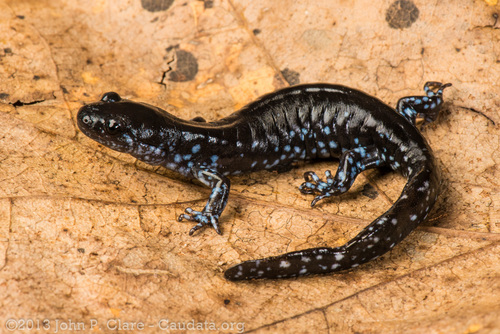 #1938 📷 8
Blue-spotted Salamander
🇳🇱 Blauwgevlekte salamander
Ambystoma laterale
LC 🌍 16k seen #1944 📷 10
Marbled Salamander
🇳🇱 Gemarmerde salamander
Ambystoma opacum
LC 🌍 12.6k seen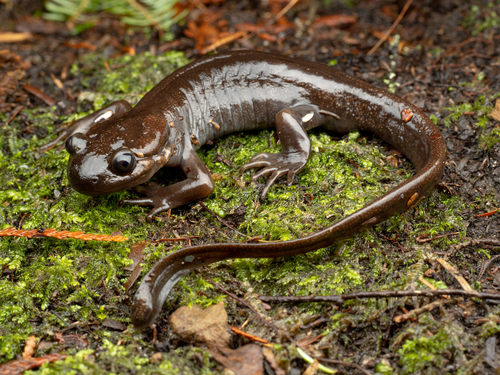 #1967 📷 7
Northwestern Salamander
Ambystoma gracile
LC 🌍 8.6k seen #1968 📷 9
Long-toed Salamander
🇳🇱 Langteensalamander
Ambystoma macrodactylum
LC 🌍 8.3k seen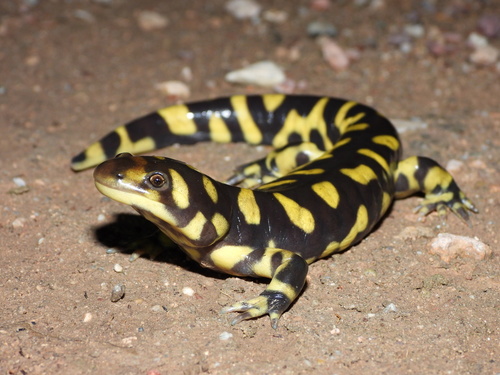 #1972 📷 10
Western Tiger Salamander
🇳🇱 Gestreepte tijgersalamander
Ambystoma mavortium
LC 🌍 7.6k seen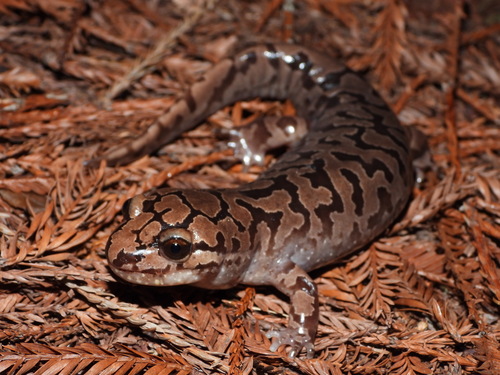 #1984 📷 10
Pacific Giant Salamander
🇳🇱 Coastal giant salamander
Dicamptodon tenebrosus
LC 🌍 6.5k seen
Sources: iNaturalist taxon 26777, Wikidata Q22718, GBIF 2431950, Wikipedia (EN), Wikipedia (NL). Intro text from Wikipedia (CC BY-SA 4.0).Updated 2026-10-24.